How to Prepare ETS, Design and Detailed Documentation for a Turbine and Power Project
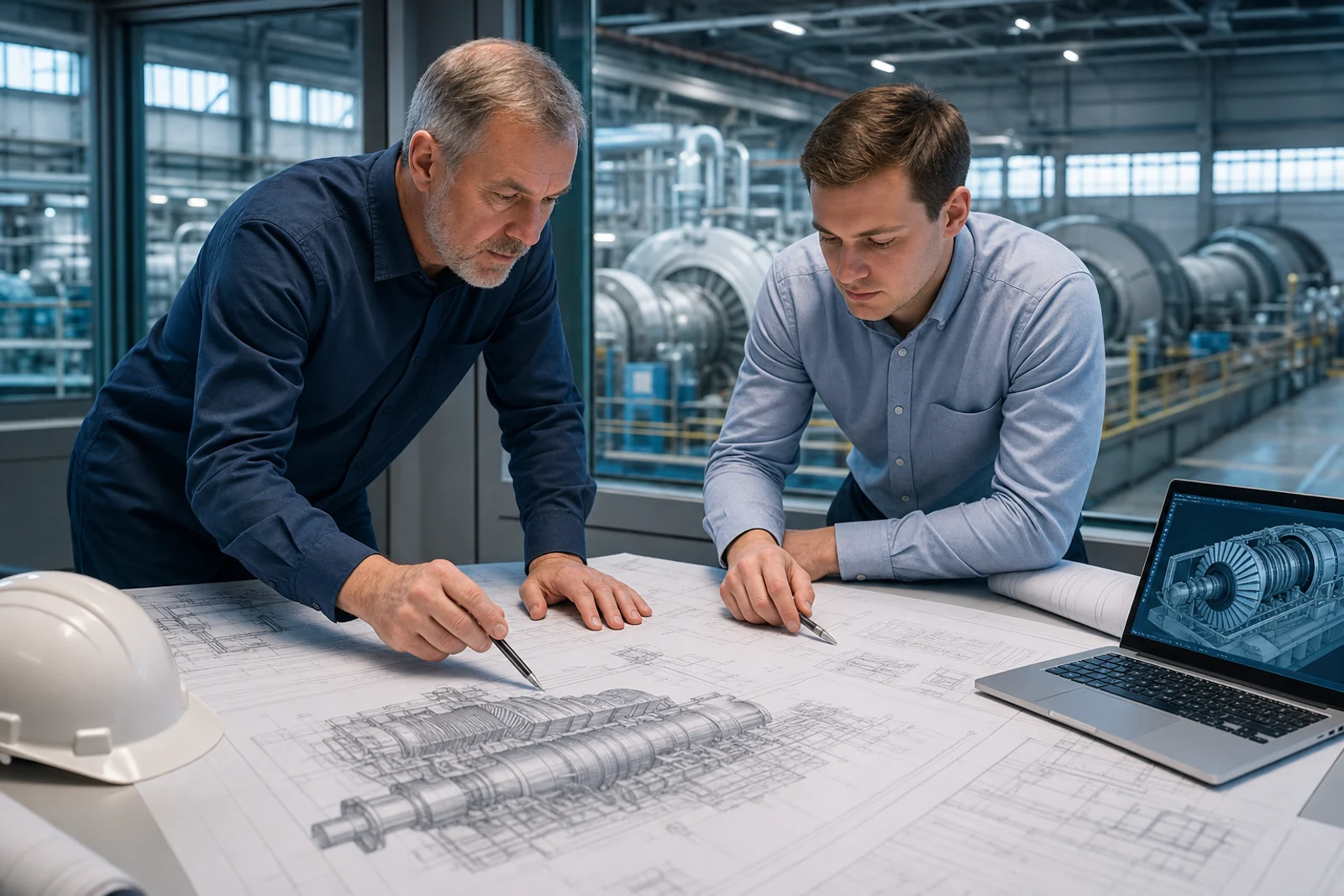
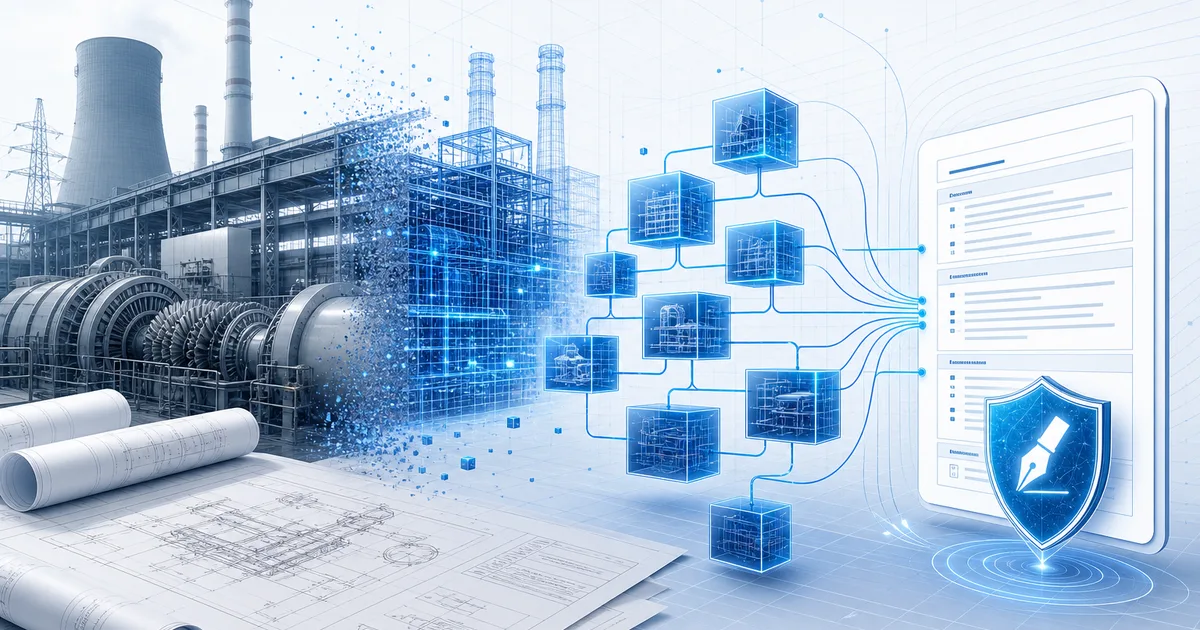
Design and detailed documentation is the engineering backbone of any power project. The chain ETS → design documentation (PD) → detailed documentation (RD) defines turbine type and rating, the thermal scheme, machine hall layout, grid connection and energy-efficiency measures. A mistake here costs an order of magnitude more than at any later stage. This article explains the difference between the three stages, the required input data, timelines, cost drivers and the expert review process.
Context: why the topic matters
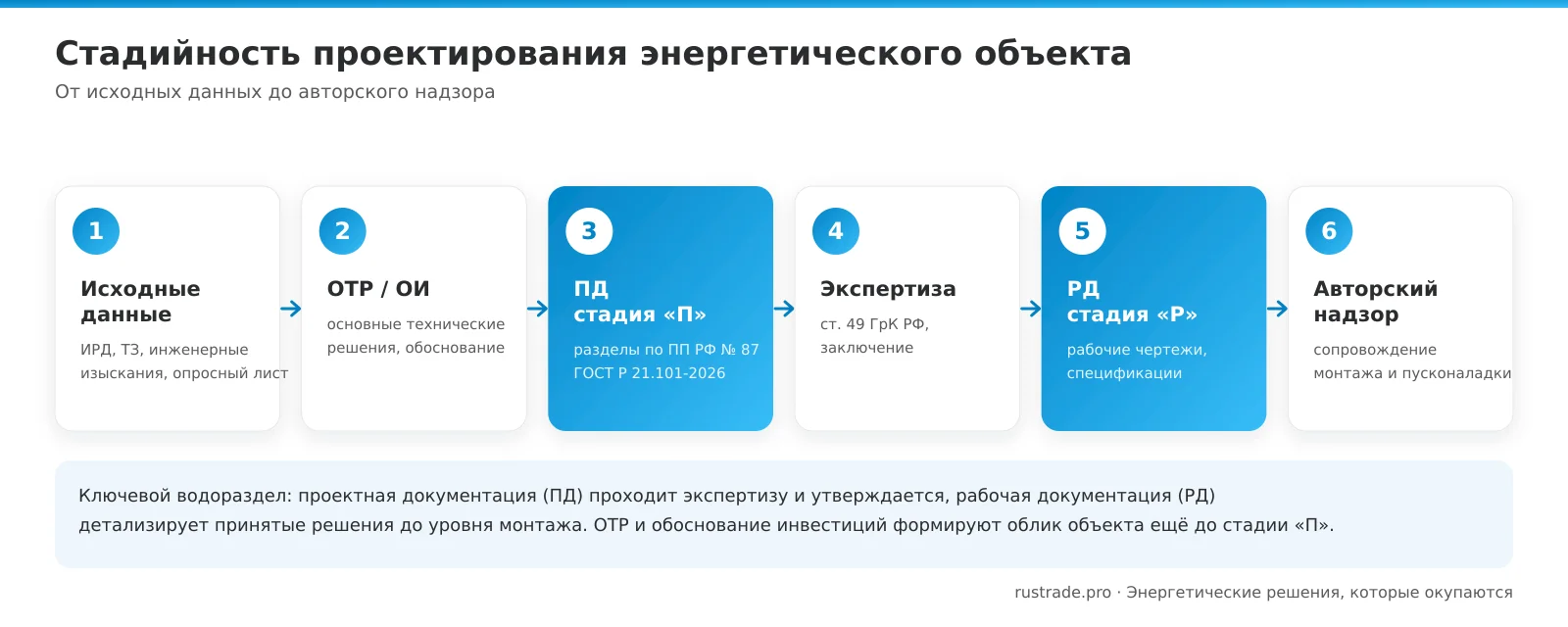
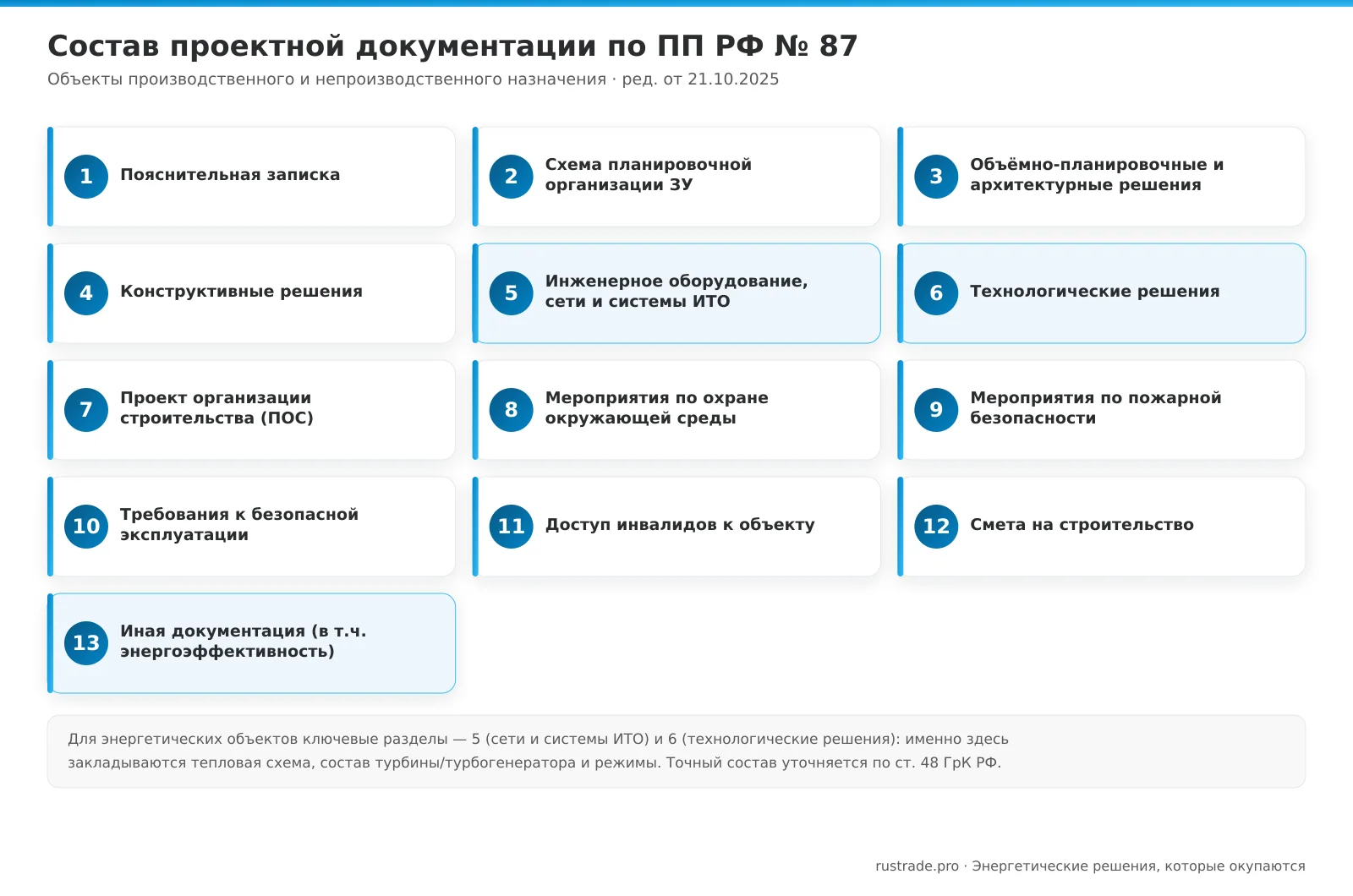
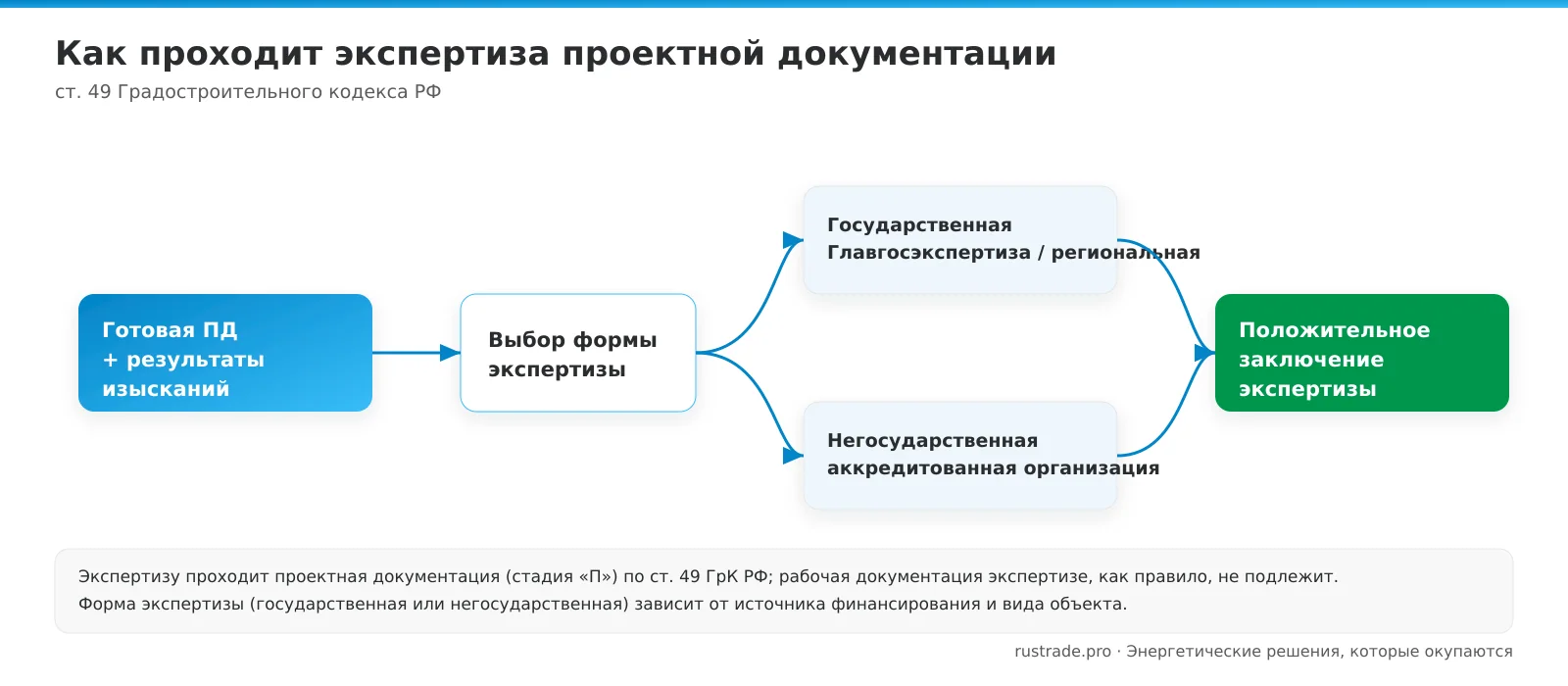
ETS (essential technical solutions) is pre-design work: equipment type and ratings, the principal thermal and electrical schemes and a feasibility and cost estimate. Design documentation (PD) is the "P" stage whose composition is set by Government Decree No. 87; it undergoes expert review and approval. Detailed documentation (RD) is the "R" stage that turns approved solutions into working drawings and specifications for procurement and installation.
| Stage | What it is | Purpose |
|---|---|---|
| ETS | Essential technical solutions, investment justification | Define the object and assess feasibility and budget |
| PD | Design documentation by sections | Pass expert review and obtain a construction permit |
| RD | Detailed documentation: drawings, specifications | Enable procurement, manufacturing and installation |
Key parameters and selection criteria
Project quality depends on the completeness of input data: site data (master plan, surveys), technology (turbine/generator type, steam parameters, thermal scheme), power data (load profiles, grid connection) and constraints (safety authorities, reliability category, energy-efficiency law). Missing data should be marked "to be confirmed via the questionnaire" rather than assumed.
Mind the standard revisions. GOST R 21.101-2020 was withdrawn on 1 April 2026 and replaced by GOST R 21.101-2026. Always verify the current revision before issuing documentation.
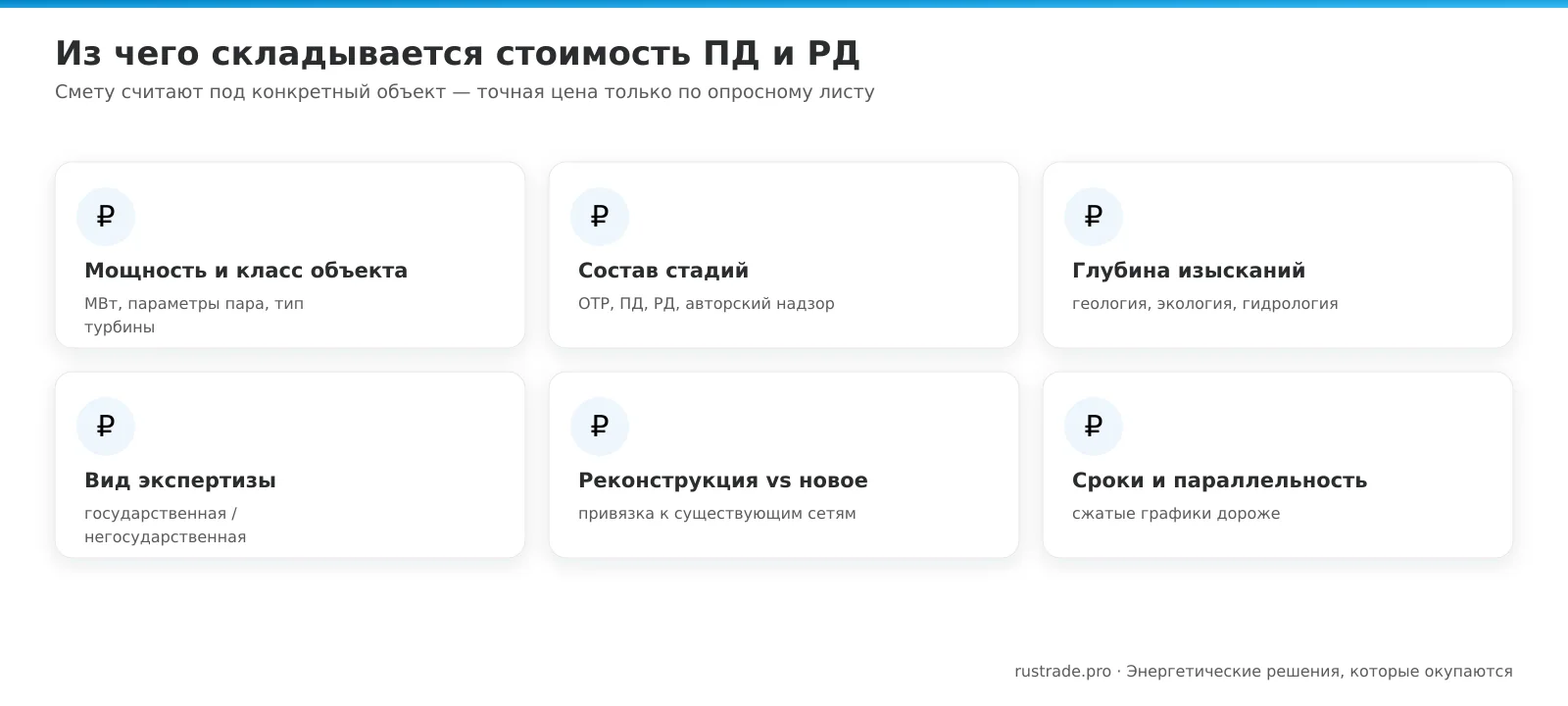
Common client mistakes
- Incomplete input data and missing surveys.
- Ordering only PD without RD, blocking the start of installation.
- Using outdated standard revisions, causing rejection at expert review.
- Blurred responsibility boundaries between client and contractor.
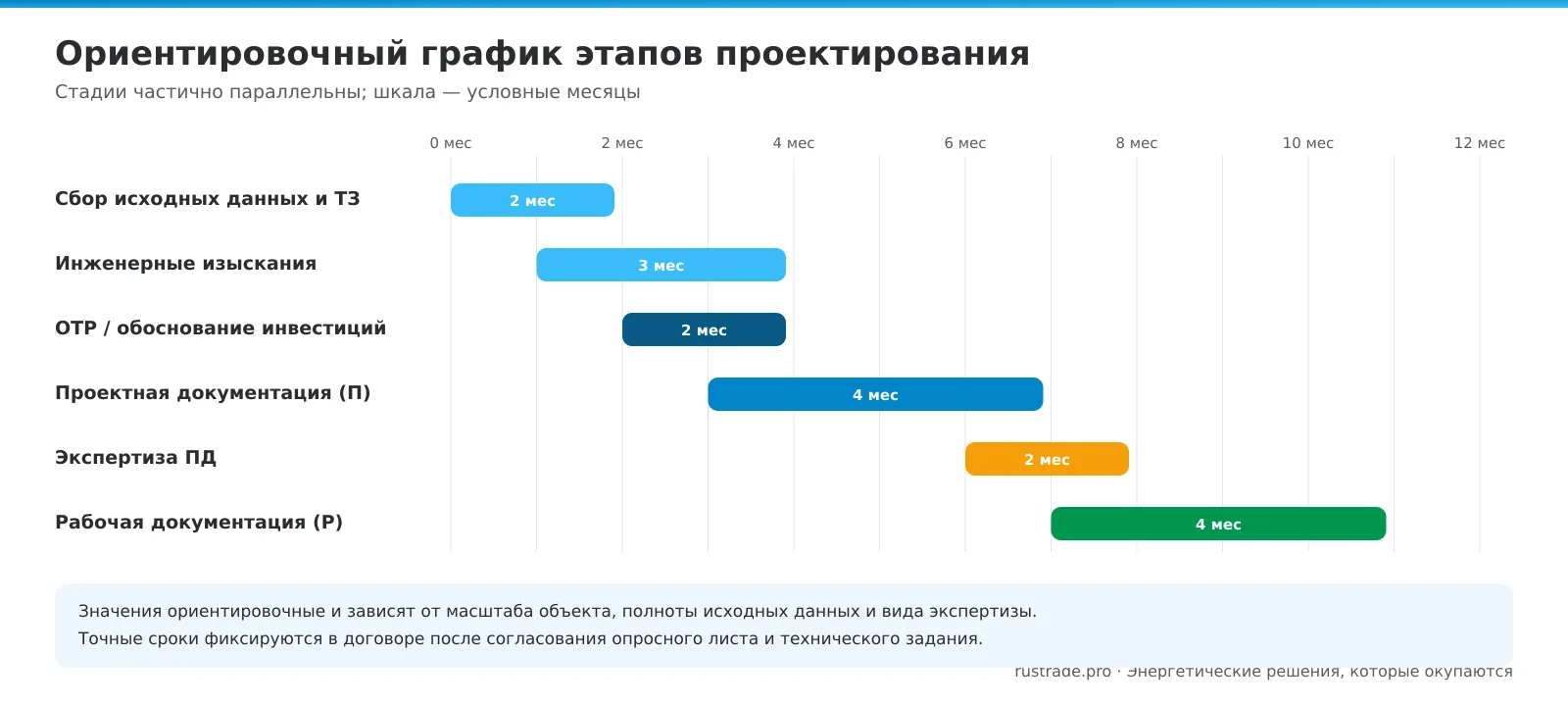
- Unrealistic timelines without parallel stages.
Practical scenarios
New captive generation, reconstruction/modernization and capacity expansion each place different demands on ETS, PD and RD. Equipment selection relies on our steam turbines, turbo-generators and condensers lines; real figures are in our case studies.
Request checklist
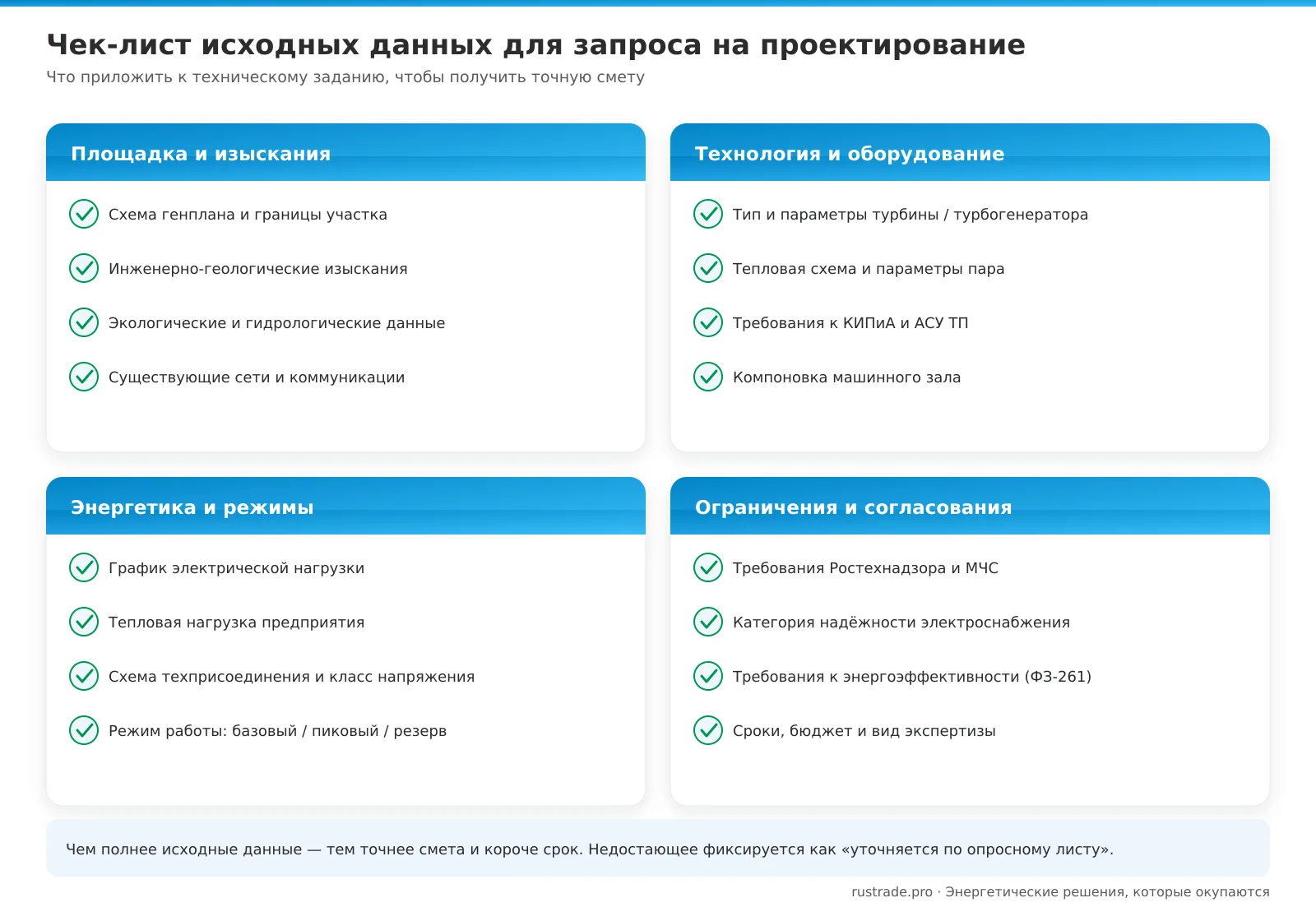
Ready to discuss your project? Send your input data and questionnaire and we will estimate the scope, timeline and cost. Request a design cost estimate →