Steam Turbines in 2025: Where Classics End and Engineering Efficiency Policy Begins
"A steam turbine is an optimization problem under constraints, not a race for nameplate values. The best flow path is one that maintains its characteristics after 2-3 repair cycles."— Ph.D., Chief Project Engineer, 18 years of STU implementation experience
A steam turbine is one of the few machines where "first principle" thermodynamics, tribology, materials science, automation, and life cycle economics converge on a single shaft. Yet myths like "this is last century technology" persist, alongside expectations of "give us 42% efficiency at any load without major overhaul for 20 years." Reality, as usual, is less comfortable and more interesting: the turbine has long ceased to be just a "rotor with blades" and has become part of a larger system where the winner is not the one with the prettiest flow path, but the one who best manages steam, condensation, operating modes, and degradation.
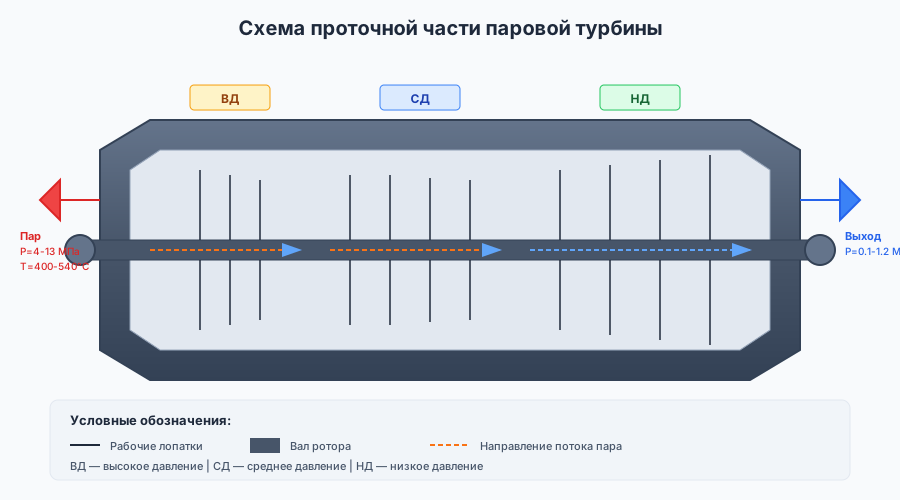
Scientific Context: Why Turbines Are About Limits, Not "Horsepower"
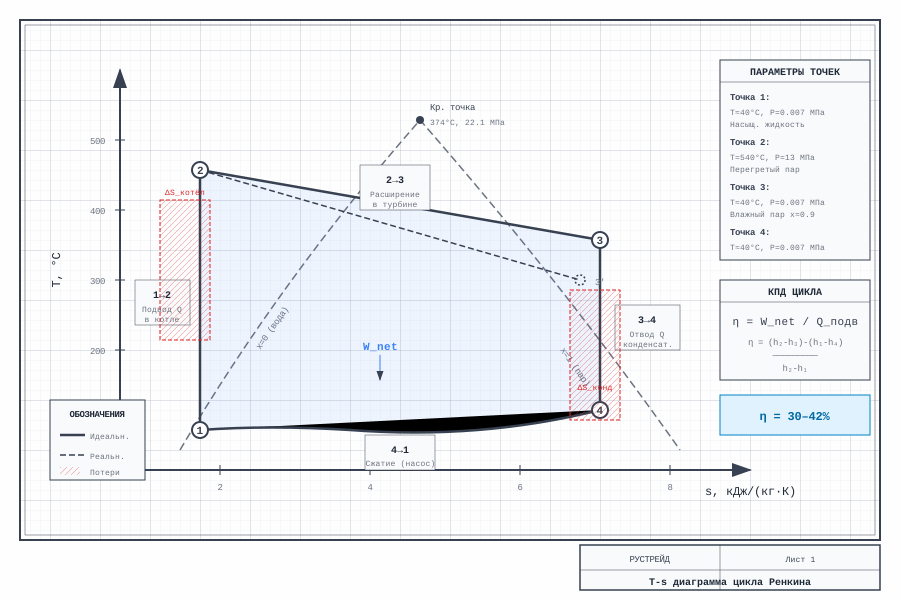
The foundation is the Rankine cycle. Seems simple: raise steam parameters, expand, condense, return the water. But as soon as you go beyond presentation level, you hit four hard constraints:
Exergetic Losses
From an exergy perspective, the main "utility destroyer" isn't the turbine itself, but irreversibilities in the boiler/heat recovery and condensation. Therefore, fighting for tenths of a percent in the flow path may yield less effect than a proper thermal scheme and vacuum/cooling management.
Wet Steam Region
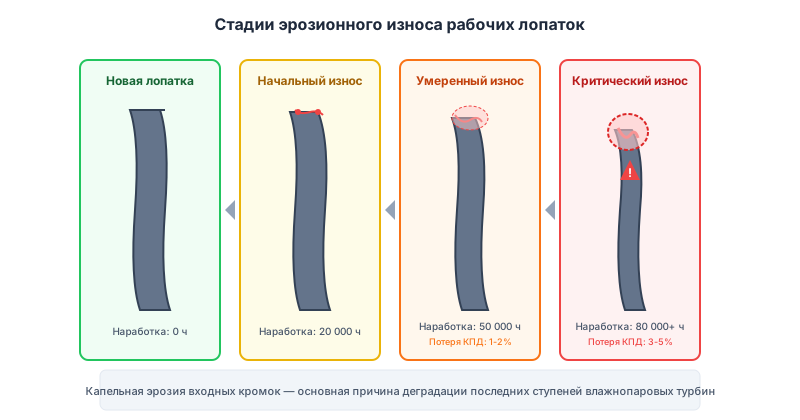
In the last stages, moisture is not aesthetics—it's edge erosion and droplet dynamics. Theoretically, you can "push" expansion for efficiency; practically, you pay with service life and vibration reliability.
Material Limitations
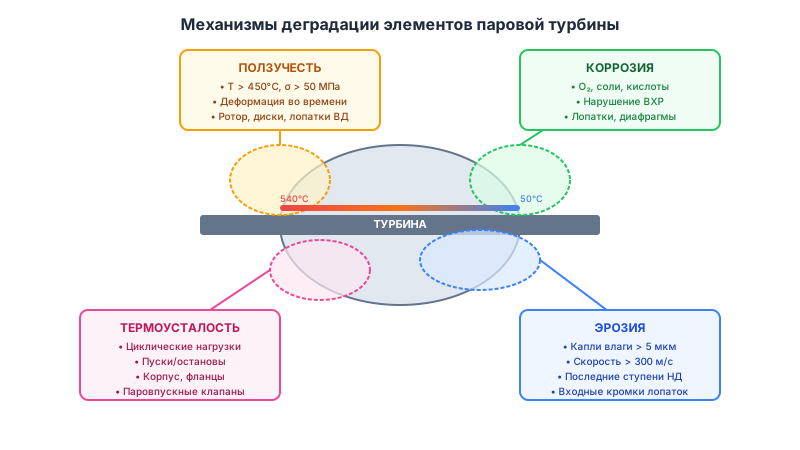
Temperature and pressure aren't just "higher is better"—it's creep, thermal fatigue, metal purity requirements, welding, NDT. Materials physics quickly turns "I want 620°C" into "I want a different plant and a different budget."
Controllability
A turbine doesn't operate in a textbook, but in grid and process modes: partial loads, extractions, consumption spikes, noise/vibration limits, startup requirements.
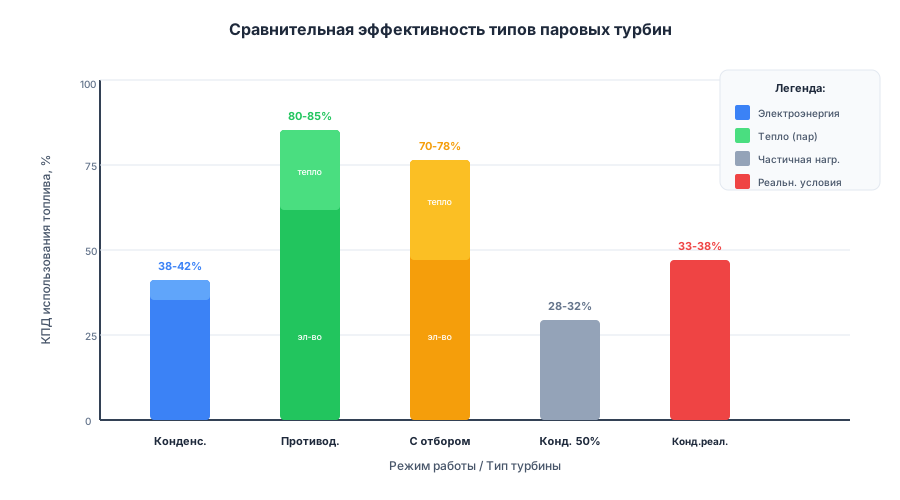
Solution Architecture: Backpressure vs Condensing vs Extraction
These aren't just "turbine types"—they're different business models.
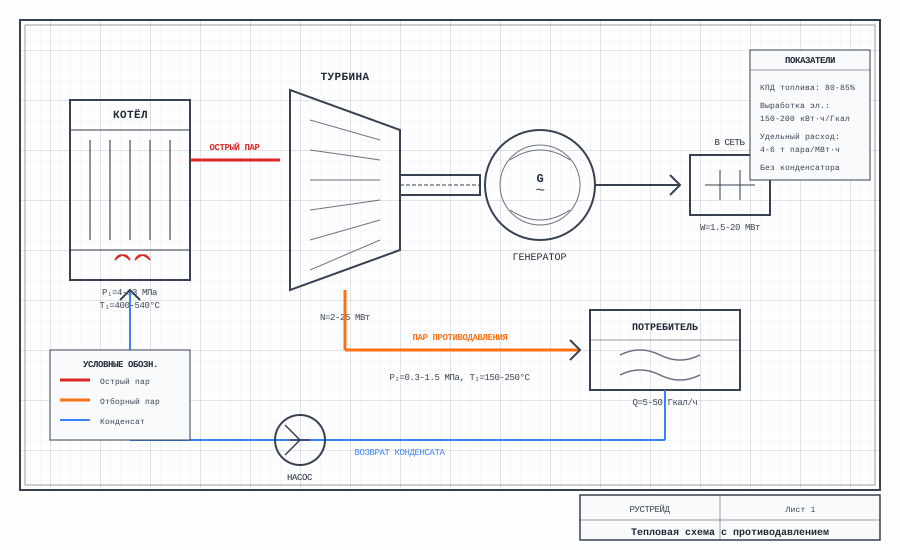
1. Backpressure Turbines
This is honest industrial logic: generate mechanical/electrical energy and pass the steam further into the process. Economics here is often stronger than condensing turbines because you monetize an "inevitable" steam flow.
Engineering conclusion: backpressure is ideal where there's a stable steam consumer and clear operational discipline.
2. Condensing Turbines
This is already playing with vacuum, cooling, and low-potential losses. The role of the condenser, circulating water/cooling tower, tightness, and heat exchange cleanliness increases sharply. In real conditions, "nameplate vacuum" is not a given, but a result of operation.
3. Extraction Turbines (extraction/bleeding)
The most underrated class from the perspective of overall plant efficiency: you can "stitch together" electricity and process heat. But this complicates automation, valve requirements, and makes the project sensitive to operational culture.
Practice: if a plant can't maintain operating modes and monitor water/steam quality, extractions become a source of emergency scenarios.
Flow Path and "Blade Magic": Where Truth Ends and Marketing Begins
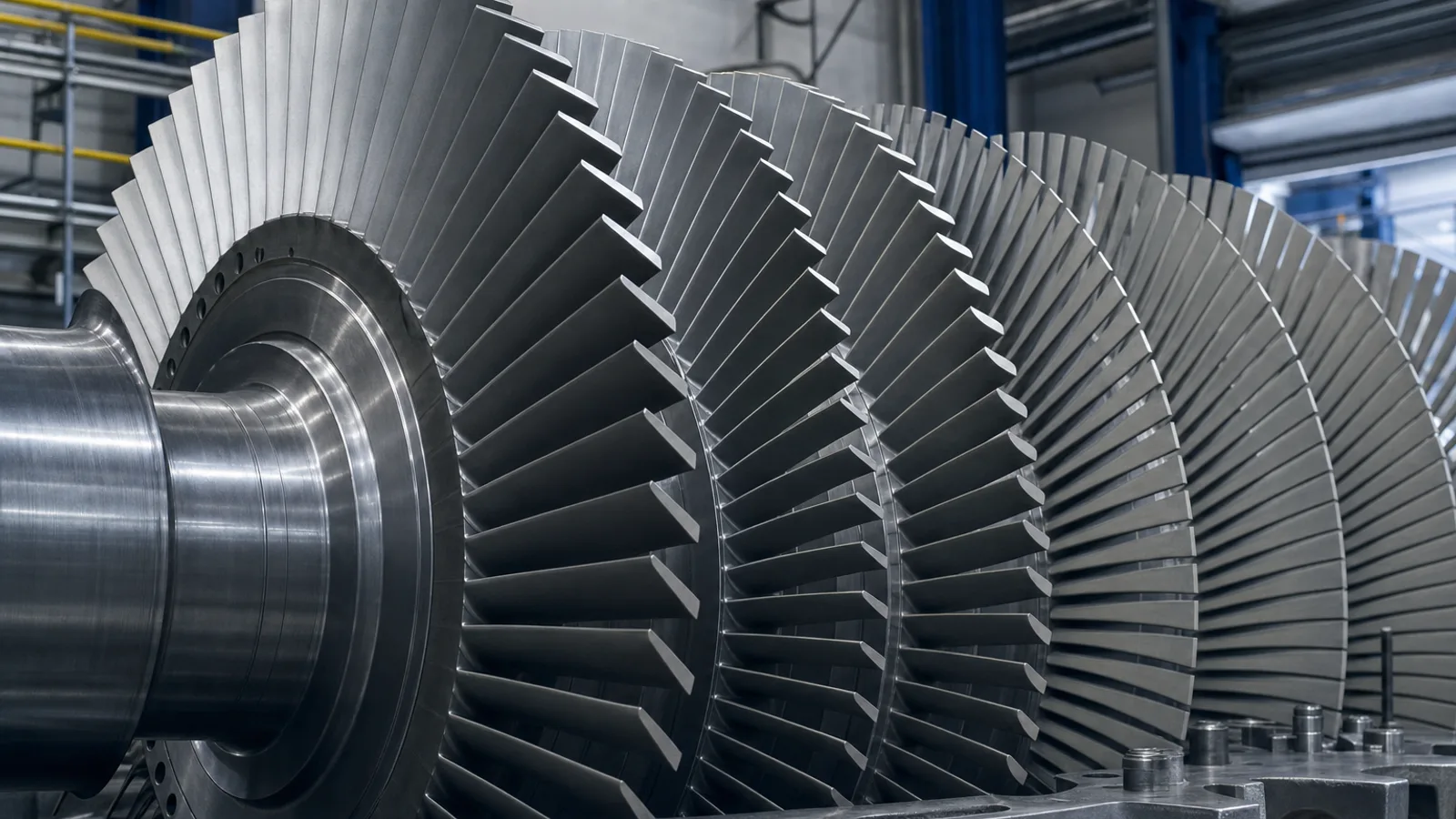
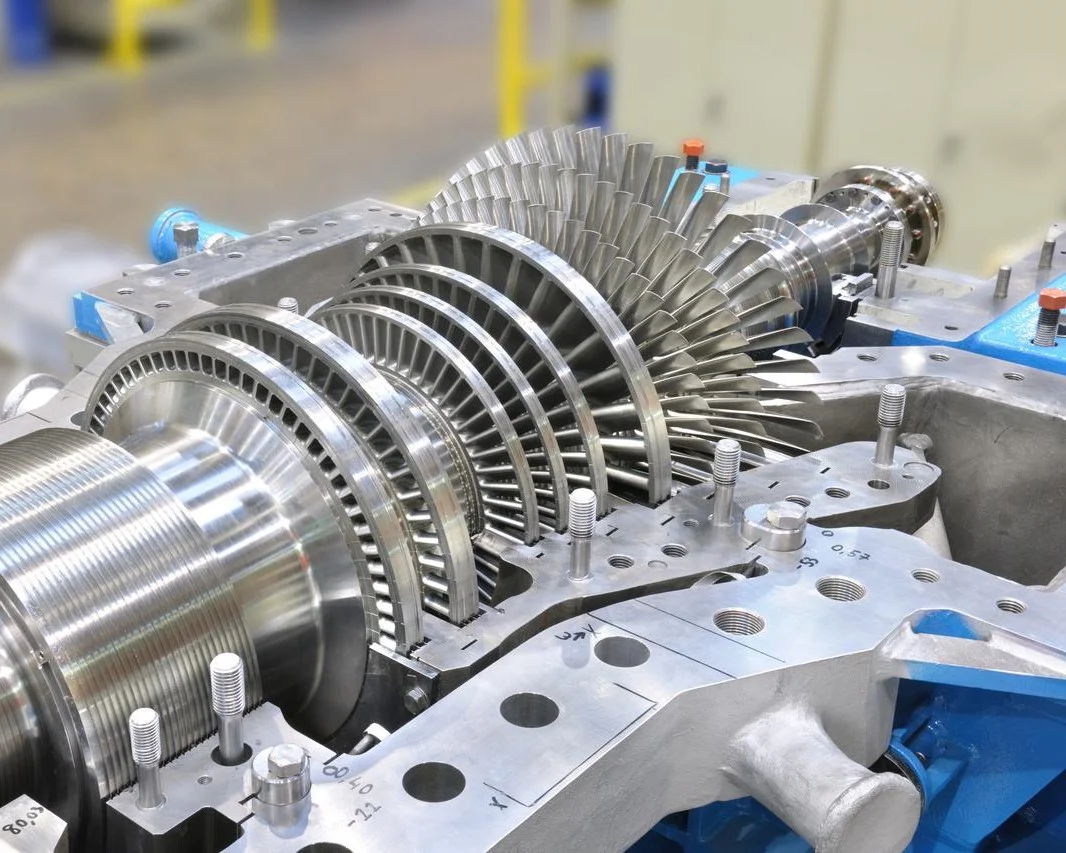
Yes, blade profiles matter. But in 2025, the debate isn't about "do you have CFD," but about how calculation relates to manufacturing reality: roughness, tolerances, balancing, edges after repair, actual moisture, actual deposits.
| Parameter | Design Value | After 3 Years | Efficiency Impact |
|---|---|---|---|
| Blade roughness, μm | 0.8-1.2 | 3-6 | −0.5...−1.2% |
| Radial clearances, mm | 0.3-0.5 | 0.8-1.5 | −0.8...−2.0% |
| Leading edge erosion | - | up to 15% chord | −1.0...−3.0% |
| Salt deposits | - | 0.1-0.3 mm | −0.5...−1.5% |
Expert Opinion
"The best flow path is one that maintains characteristics after 2-3 repair cycles, not one that looks good in a presentation. Last stage optimization often conflicts with service life due to erosion and vibration loading."
—
Materials and Degradation: Creep, Corrosion, Erosion—Three Different Enemies
- Creep (high temperatures/stresses) slowly "eats" geometry and fits, especially during frequent starts and thermal cycles.
- Corrosion is often a consequence of chemistry: oxygen, salts, improper deaeration regime, water chemistry violations.
- Erosion on wet stages is droplet kinetics, separation quality, moisture separator/reheater design, and yes, operating modes.
Control and Automation: A Turbine Without "Brains" Is Uncompetitive Today
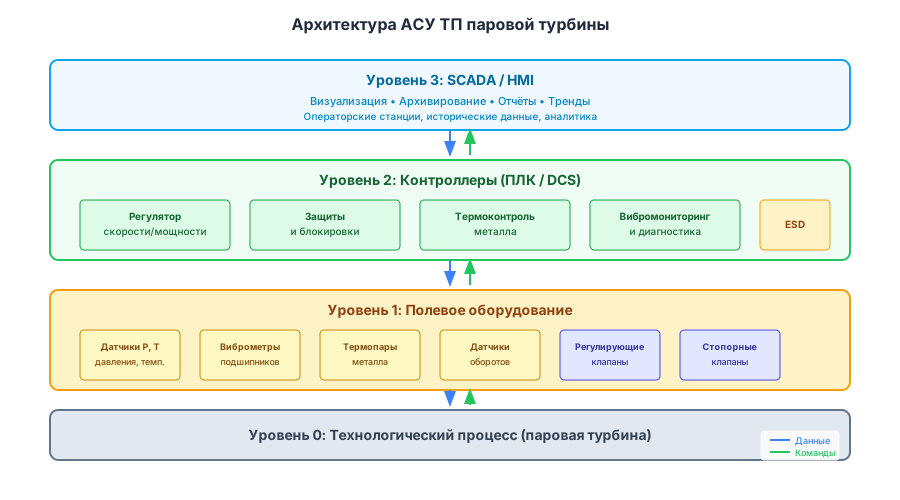
A modern turbine is a system with feedback loops: speed/power, extraction pressure, metal temperature, vibrations, vacuum, startup limitations.
What Actually Delivers Results:
- Model-based constraints on thermal stresses provide less thermal fatigue during startups.
- Proper warm-up/blowdown logic reduces the "human factor" impact.
- Online vibration diagnostics and trending for early detection of bearing degradation, misalignment, rubbing.
Efficiency, "Economic Effect," and Calculation Honesty
I've seen too many feasibility studies where the effect looks beautiful until you ask three questions:
They compare with an "outdated unit" that actually no longer operates in the modes assumed in the calculation.
Often they take one or two modes and extrapolate to 8000 hours. At the plant, actual runtime and load profile may be completely different.
Vacuum, cooling, water quality, condenser/cooling tower condition, steam piping, valves. These things are "invisible" in the turbine but can eat half the effect.
Expert's Hard Opinion
"If the effect is calculated without operational regime and without steam/water quality, it's marketing, not engineering."
—Industry Pain Points: Why Steam Turbines "Argue" With Themselves
1. Steam Turbine vs Gas/CCGT
In power generation, CCGT often wins on paper, but industry lives in a world of fuel, reliability, and heat consumers. Where there's process steam and heat recovery, steam turbines remain highly competitive.
Controversial thesis: "Steam turbines aren't needed for decarbonization." In practice, industrial decarbonization often starts with improving efficiency and heat recovery—that's steam territory.
2. "Higher Parameters Mean Better"
Super/ultra-supercritical parameters aren't free efficiency—they're a leap in material, welding, inspection requirements, and most importantly, operational culture. At some sites, a more "modest" but reliable scheme with better repair logistics wins.
3. Import Substitution and Localization
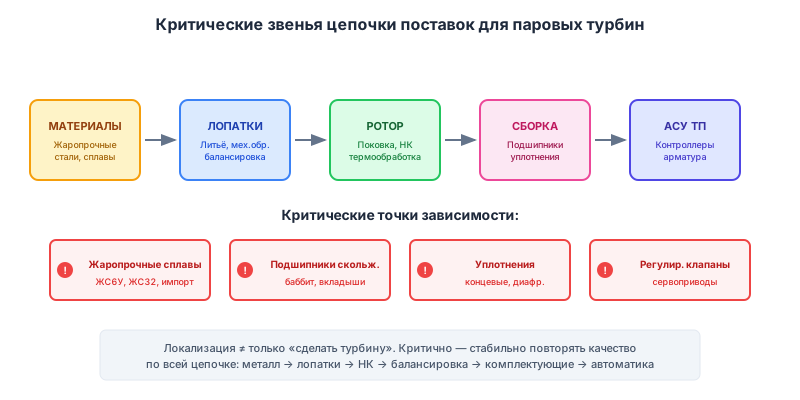
The sharp question isn't "can we make a turbine," but can we consistently repeat quality (metal, blades, NDT, balancing, bearings, seals, valves, automation). A turbine is a chain, and the weak link is often not where you look for it.
What I Consider Signs of a "Mature" Turbine Implementation Project
- Thermal scheme and operating modes are described as thoroughly as the turbine itself.
- Degradation management plan: what parameters we monitor, what thresholds, how we decide on repairs.
- Infrastructure (condenser, cooling, water chemistry, valves, piping) is included in budget and schedule.
- Startup scenarios and personnel training are part of delivery, not "we'll figure it out later."
Where Steam Turbine Engineering Is Heading
- More operational flexibility: turbines will be designed not for "nominal" but for range and frequent transitions.
- Smarter control: model-based limiters and adaptive settings for degradation.
- Materials and coatings: fighting for last stage and seal service life.
- Integration with heat recovery: economics will increasingly be determined by system approach, not "turbine nameplate."
Engineer's Final Thought
A steam turbine is neither a "retro machine" nor a "sacred cow." It's a mature technology where the win lies in discipline: operating modes, water/steam, infrastructure, diagnostics, repair strategy. The most successful implementations I've seen happened not where there was "the most advanced flow path," but where the team honestly described site limitations and built a system, not just an individual unit.
Sources and Standards
- IAPWS Industrial Formulation — water and steam properties
- ASME PTC 6 — turbomachinery testing and performance evaluation
- IEC 60045 — general requirements for steam turbines
- Dixon S.L., Fluid Mechanics and Thermodynamics of Turbomachinery
- Kearton W.J., Steam Turbine Theory and Practice
- VGB Guidelines — power plant equipment operation