

Energy solutions that pay off

Energy Facility Design

Full-cycle engineering services for thermal power plants and industrial energy centres — from investment justification and basic technical solutions to project and working documentation, design supervision and surveys.

Engineering services

We deliver the full set of engineering services for energy projects, ensuring high quality and compliance with regulatory requirements at every stage.

Investment Justification (IJ)

Comprehensive analysis of project economic efficiency, including capital investment assessment, payback period calculation and investment attractiveness determination

Investment Justification (IJ)

Basic Technical Solutions (BTS)

Development of fundamental technical solutions meeting project objectives and ensuring optimal parameters for future energy facility

Basic Technical Solutions (BTS)

Project Documentation (PD)

Preparation of complete document package for passing expertise and obtaining construction permits for energy facilities of any complexity

More about PD & WD
Project Documentation (PD)
Working Documentation (WD)

Working Documentation (WD)

Creation of detailed technical documentation for construction, including drawings, specifications and instructions for installation and construction work

More about PD & WD
Design Supervision

Design Supervision

Monitoring construction and installation for compliance with design solutions and timely modifications when necessary

Surveys and Expertise

Surveys and Expertise

Professional assessment of foundations and structures condition for modernization projects of existing energy facilities

Expertise Support

Expertise Support

Comprehensive support for approval of design solutions in expert organizations and local authorities

Design of plant energy systems

The thermal and electrical balance sets the scheme, and the scheme determines the choice of turbine, boiler and switchgear.

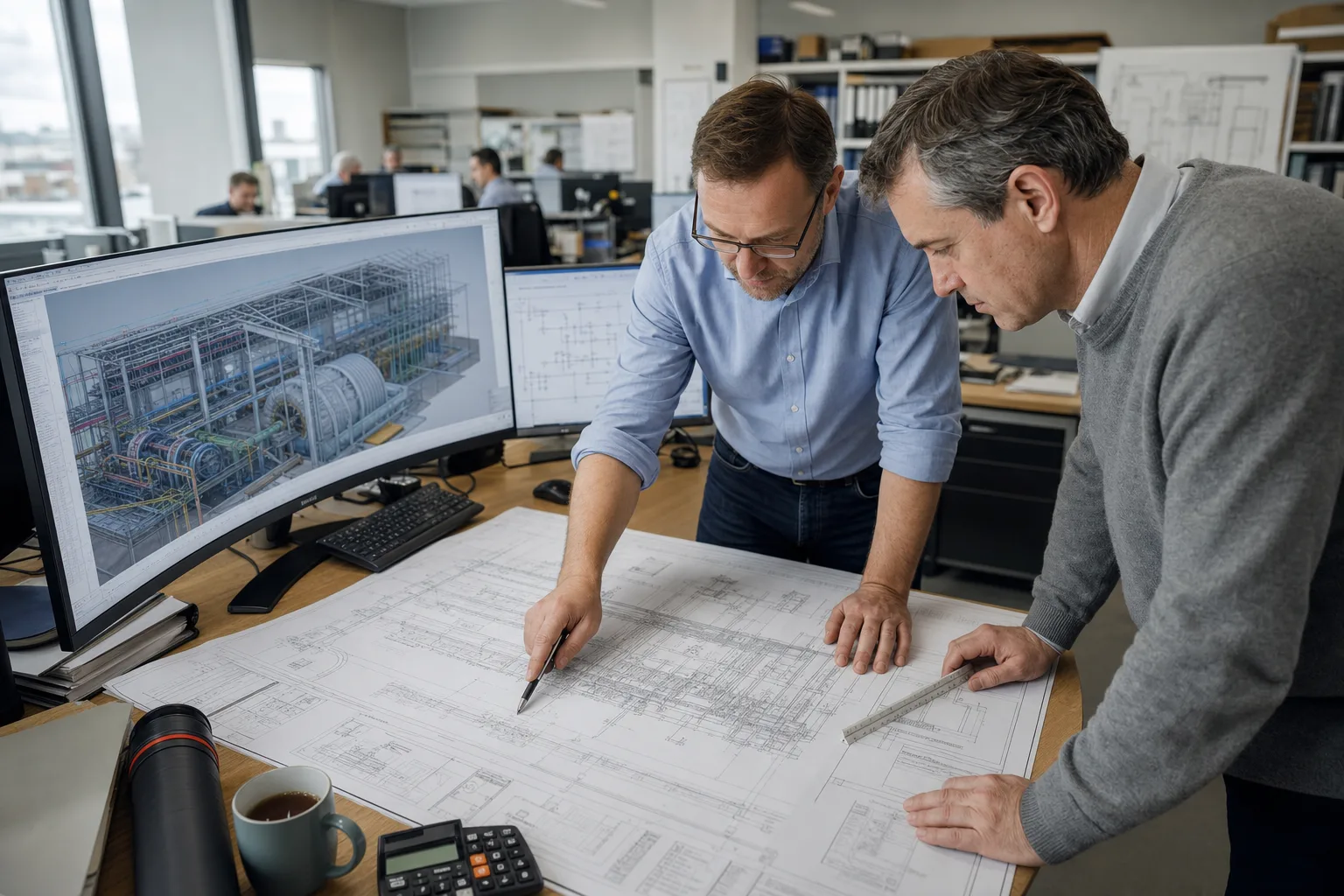
Design office engineers reviewing a plant energy system diagram on a wide monitor alongside printed drawings

A plant energy system design starts with the balance: how much steam the process needs and at which parameters, how much electricity the workshops consume, and how those figures change by the hour and by the season. The balance sets the scheme. Cogeneration with extraction steam for the process, a back pressure scheme serving a specific heat consumer, a condensing scheme prioritising electrical output: the choice between them follows from the numbers, and the particular machine is selected for the chosen scheme.

The electrical section runs alongside the thermal one. Selection of turbogenerators, the scheme for feeding power to the switchgear sections and the operating modes are all calculated together with the extraction scheme. Thermal and electrical calculations are performed in Ansys and related CAD systems, equipment and piping layouts in KOMPAS-3D and SolidWorks, which clears clashes before detailed drawings are issued.

A plant energy system almost always has to be integrated into existing infrastructure: an operating boiler house, established electrical networks, switchgear, and older equipment that stays on standby or in service through the transition period. Redundancy is built in along three lines at once: capacity, fuel type and export routes, so that the failure of one unit does not stop production.

Variable load operation deserves attention while equipment is still being selected. A real daily load curve rarely keeps the turbine set at its rated point, so both turbine and boiler have to run reliably across a wide range of part loads. Future load growth is allowed for in advance, including reserved space for additional equipment, so that expansion in a few years does not force a complete relayout. How this works on a complex facility is covered in our article on turbine hall design.

The nodes a design has to tie together

1
Steam source

Boiler or boiler house that sets the steam parameters at the turbine inlet

2
Turbine set

Steam turbine with gearbox and generator converting steam energy into electricity

3
Steam consumers

Process equipment and heating networks fed from extractions or back pressure

4
Electrical section

Generator, switchgear and the scheme for feeding power to the plant busbars

5
Metering and controls

Commercial and technical metering of steam and electricity, plus the process automation system that governs operating modes

6
Standby source

Boiler, grid feeder or diesel generator for the period when the main equipment is out for repair

Power industry projects: types of facilities

A TPP, a CHP plant, an energy centre and captive generation all revolve around the steam cycle, yet their input data and site constraints differ.

The power industry projects we work on fall into five types. Each one changes the set of input data, the site constraints and the depth of process engineering. Turbine hall layouts are developed around specific steam turbines, so equipment selection and design decisions move towards each other.

Thermal power plant (TPP)

The facility is built to feed power into the grid. The process design section covers the power export scheme, the layout of the turbine hall around specific steam turbines and the requirements for the circulating water system or cooling towers. The site is usually clear, and the plot boundaries are set by the sanitary protection zone derived from emission and noise limits.

Combined heat and power plant (CHP)

A district heating circuit is added to the electrical section: heating networks, boiler substations or heat substations, and combined generation mode. The utilities section grows more complex because extraction steam has to be matched to the heat load curve of the city or industrial area. Commissioning normally runs in stages, without interrupting heat supply to existing consumers.

Industrial energy centre

The layout follows the process balance of the plant. The site is tight, with operating workshops and access roads nearby, so the construction organisation section and the fire safety section are developed with the continuity of neighbouring production in mind.

Captive generation

Steam and electricity go to the production process. The decisive input is the customer load profile: daily and seasonal swings in consumption drive both equipment selection and the redundancy scheme.

Modernisation and reconstruction

Work is based on the actual condition of the equipment recorded during the survey, within the limits of existing networks and foundations. Detailed design sets for the TM, ES, KZh, KM, VK and OV disciplines are reissued only to the extent of the difference between the existing and the designed scheme, and the sequence of works is agreed against the plant outage schedule.

Facilities of this kind include a sugar plant, an oil extraction plant, a chemical production site and a TGK facility; examples are collected in completed projects.

Engineering design in industry

The site of an operating plant is almost never empty, and that shapes the entire way of working.

Engineering design in industry starts from whatever already stands on the site. Equipment, piping, pipe racks and the utilities of neighbouring workshops take up space, and the new facility has to be fitted between them while keeping access roads, safety clearances and maintenance access intact.

Integration with the customer process begins on day one. The thermal scheme, steam parameters, electrical loads and operating modes are dictated by a specific production cycle that cannot be stopped at will. Hence the constraints on tie-ins: new pipelines, cable routes and foundation embedments are installed within the same windows as scheduled maintenance of the main equipment, so the designer has to know those dates in advance.

Coordination with the operations team becomes a procedure of its own. Operations staff review the layout for maintainability, access to shut-off valves and compliance with their internal regulations while the work is still at the technical solutions stage, before detailed drawings are issued. The project sequence is aligned with the plant maintenance schedule: some sets are issued for the current outage, others move to the next window, and the whole sequence is fixed in a work schedule agreed with the customer.

The construction organisation section for an operating plant covers the whole site: escape routes, fire hazard zone boundaries, and the points where utilities are temporarily disconnected for tie-in works. That adds approvals, but by the time commissioning starts, cooperation with the production staff is already established.

Engineering services lifecycle

From investment justification to design supervision — at a glance. The detailed breakdown of the PD/WD stage lives on a dedicated page.

Stage 1 icon

Pre-project Research: IJ, BTS, surveys

Analysis of initial data and technical specifications, engineering surveys, investment justification (IJ), basic technical solutions (BTS), and condition surveys of existing equipment. This stage produces the dataset on which all subsequent documentation is built.

Pre-project Research: IJ, BTS, surveys
Stage 2 icon

Project Documentation (PD)

Full set of PD sections per the Regulation approved by Russian Government Decree №87, which since 1 September 2022 comprises 13 sections: explanatory note, site planning layout, space-planning, architectural and structural solutions, engineering equipment and networks, technological solutions, construction organization, environmental protection, fire safety, safe operation requirements and the cost estimate.

More about PD & WD
Project Documentation (PD)
Stage 3 icon

Expertise and Approvals

Submission of documentation to state or non-state expertise, resolution of comments, defending adopted technical solutions until a positive conclusion is obtained. The maximum term of state expertise is 42 working days under art. 49(7) of the Town Planning Code.

Expertise and Approvals
Stage 4 icon

Working Documentation and Design Supervision

Issuing sets of working drawings by marks (TM, KZh, KM, ES, AK, ATKh, OV, VK, GP) prepared per GOST R 21.101-2026, supporting construction-and-installation works, agreeing deviations and updating documentation.

Working Documentation and Design Supervision

Ways of working: from investment justification to EPC

Two situations that fall outside an ordinary contract for a documentation package.

Investment justification: scope and difference from design documentation

Investment justification is carried out under a separate contract as a pre-design document: the Russian Town Planning Code contains no such stage, it regulates design and detailed documentation. The scope covers a feasibility study to GOST R 58917-2021, an appraisal of scheme options, for instance captive generation versus buying capacity from the grid, and an estimate of capital costs under the methodology approved by Ministry of Construction order No. 707/pr as amended by order No. 180/pr of 26 March 2026.

This is also where the type of expert review is provisionally decided. The developer may choose between state and non-state expert review, except for the cases listed in part 3.4 of article 49 of the Town Planning Code, where only state review is permitted. The level of detail at this stage is deliberate: scheme decisions and project economics are fixed, while the detailed sections come later, at the design and detailed documentation stage.

Turnkey delivery and the EPC approach

EPC (engineering, procurement, construction) combines all three stages in a single contract with one responsible contractor. The boundary of responsibility shifts: under separate contracts the customer has to bring designer and builder together and resolve the contradictions between them, whereas under EPC that is the single contractor's job.

The same package includes support during expert review, which is part of our standard scope of services, and allowance for its duration in the overall construction schedule: up to 42 working days under part 7 of article 49 of the Town Planning Code, with a possible extension of 20 working days on application. The format makes sense when the customer needs a single point of accountability for the commissioned facility as a whole.

Design and operation of power facilities

Once a facility is commissioned, design work continues in the form of ongoing support.

Design and operation of power facilities are linked across the whole life cycle. Design supervision runs from the start of construction and installation works through to handover: we verify that installation matches the design decisions and issue changes promptly whenever the site reveals a discrepancy with the detailed drawings. We take a facility from pre-design studies to this stage under a single contract, so changes made on site do not get lost between different contractors.

Surveys of operating equipment ahead of modernisation or life extension are also available as a standalone service. They result in a technical report on the condition of structures and foundations. Customers need this when an independent assessment of remaining life is required before deciding on a major overhaul.

Operational support after commissioning includes advice on equipment operating modes and participation in the investigation of abnormal events whenever operating staff ask for technical assistance.

The operations team needs its own set of documents, different in composition from the package prepared for expert review: as-built documentation to the current GOST R 21.101-2026, which superseded GOST R 21.101-2020 on 1 April 2026, operating and maintenance instructions, plus the changes introduced into the detailed drawings to reflect actual installation.

0
Completed projects
0
Regular clients
0
Years of experience
0
Leading specialists
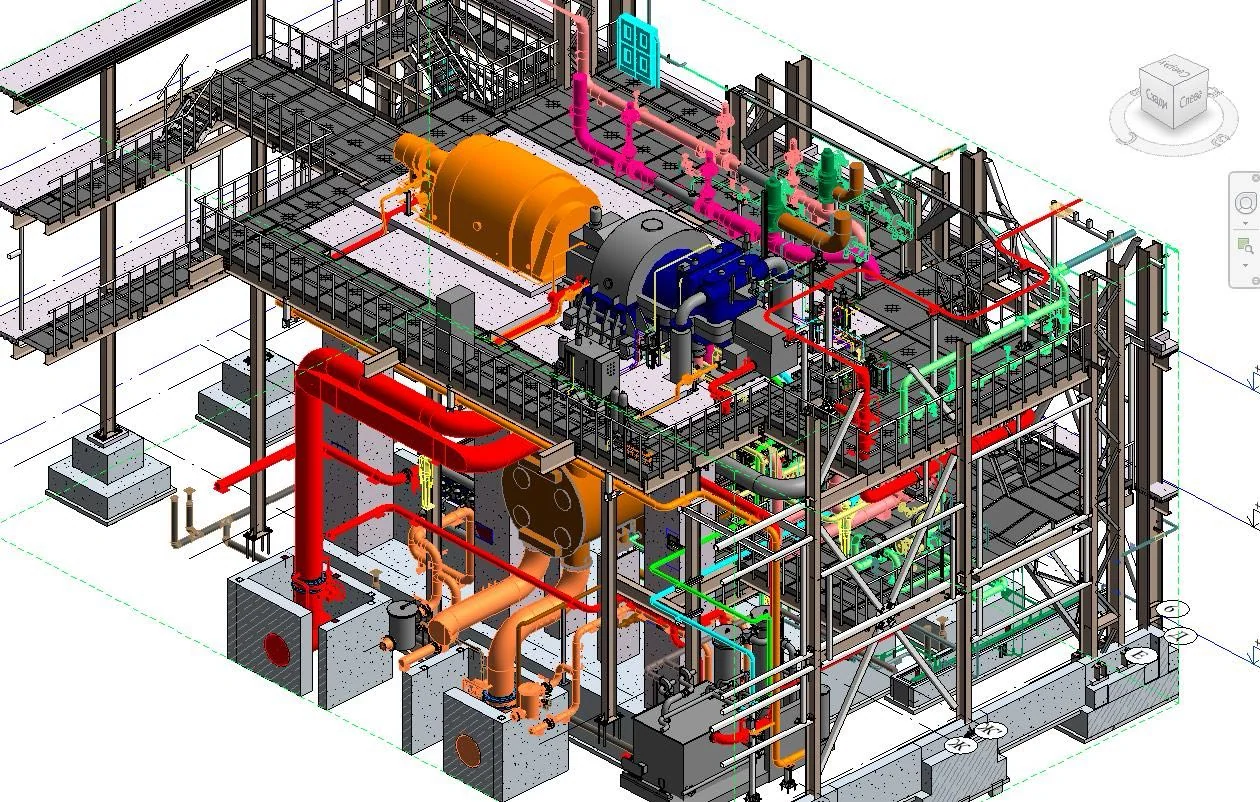
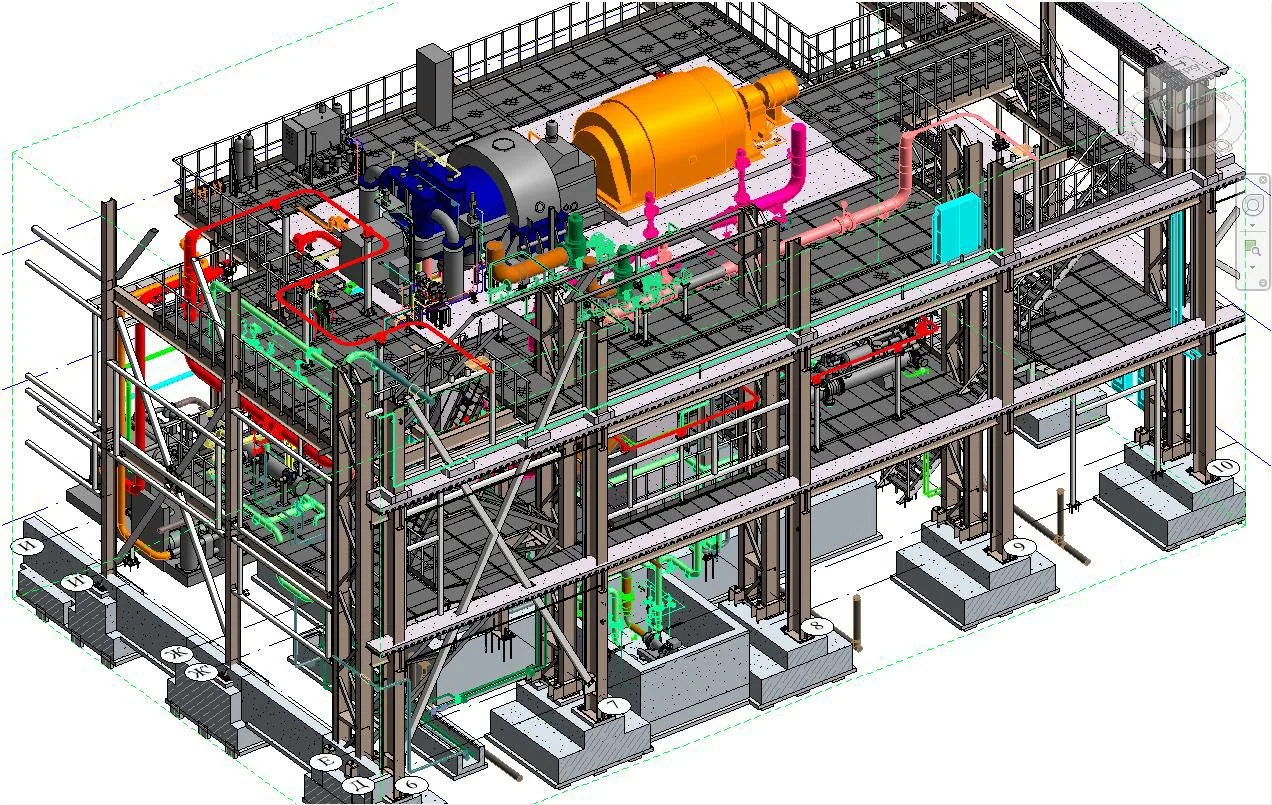
New Project

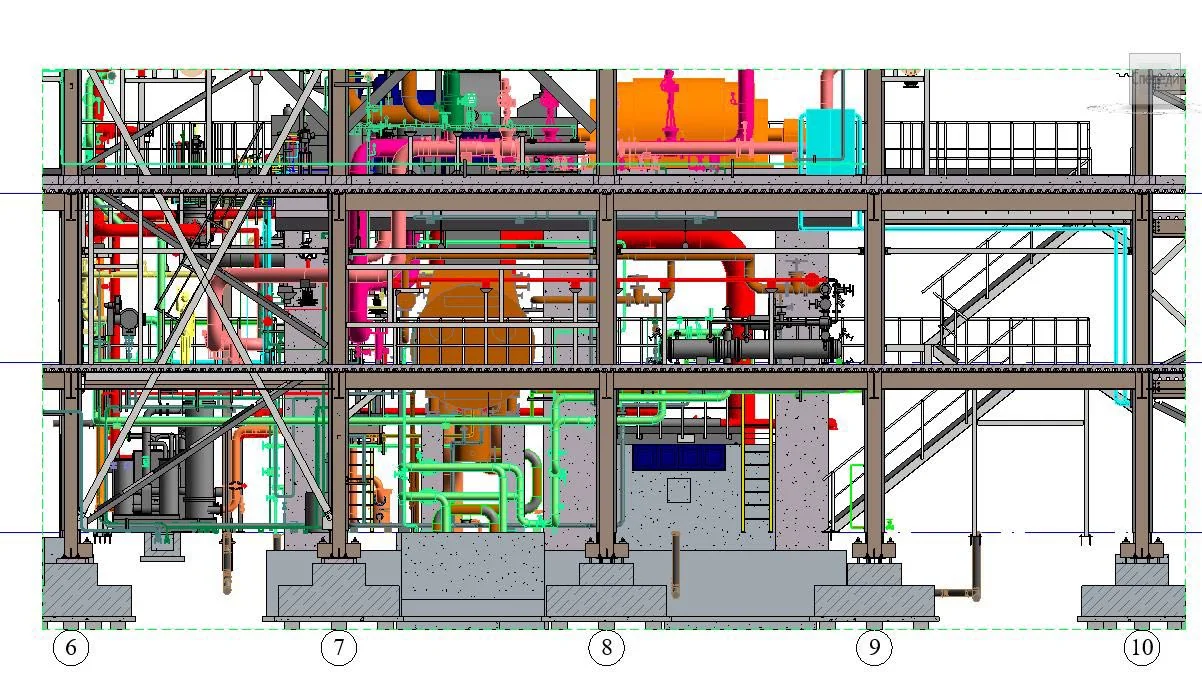
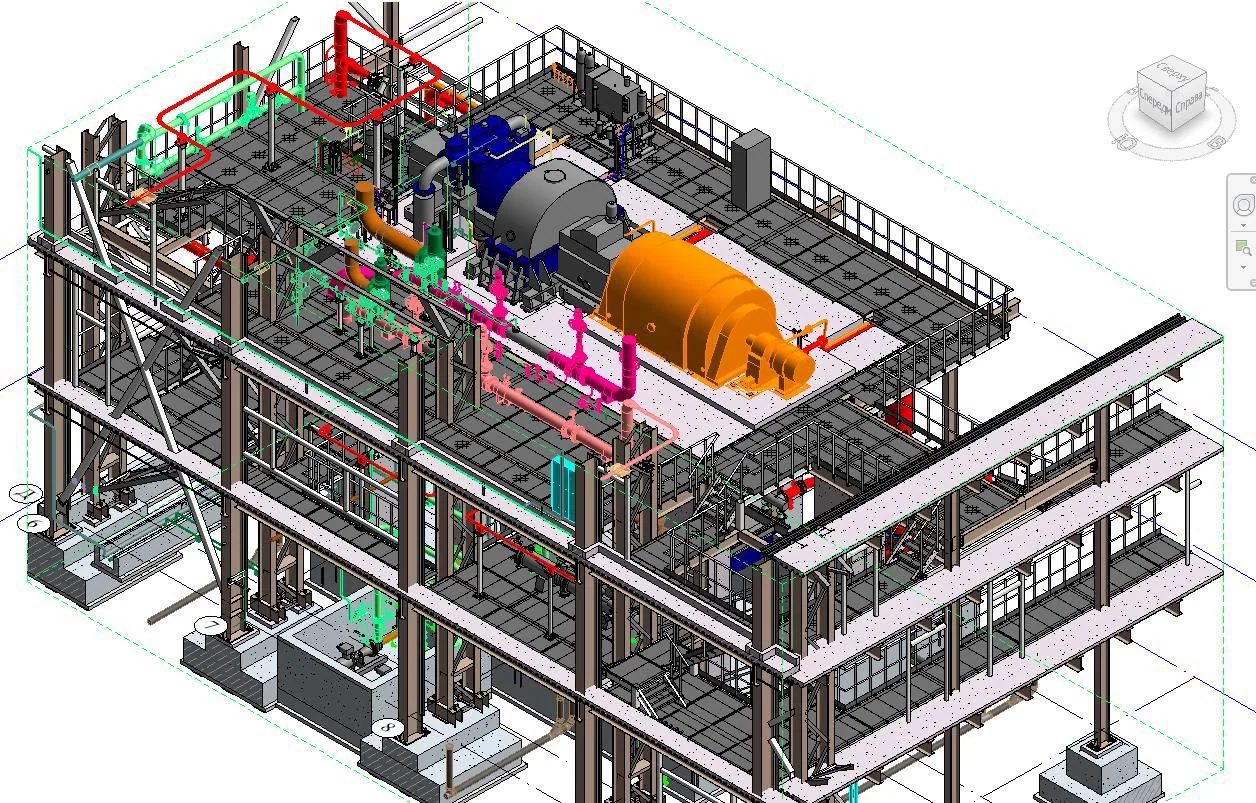
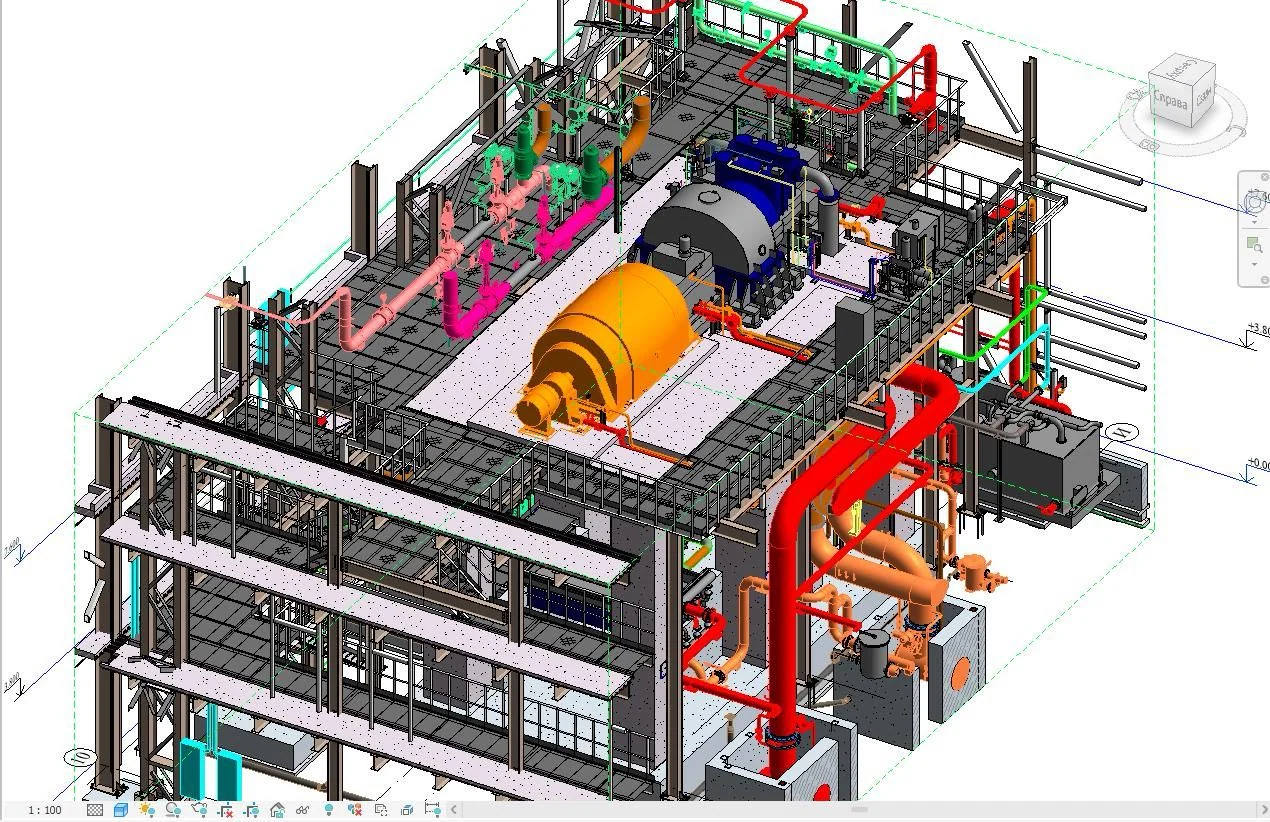
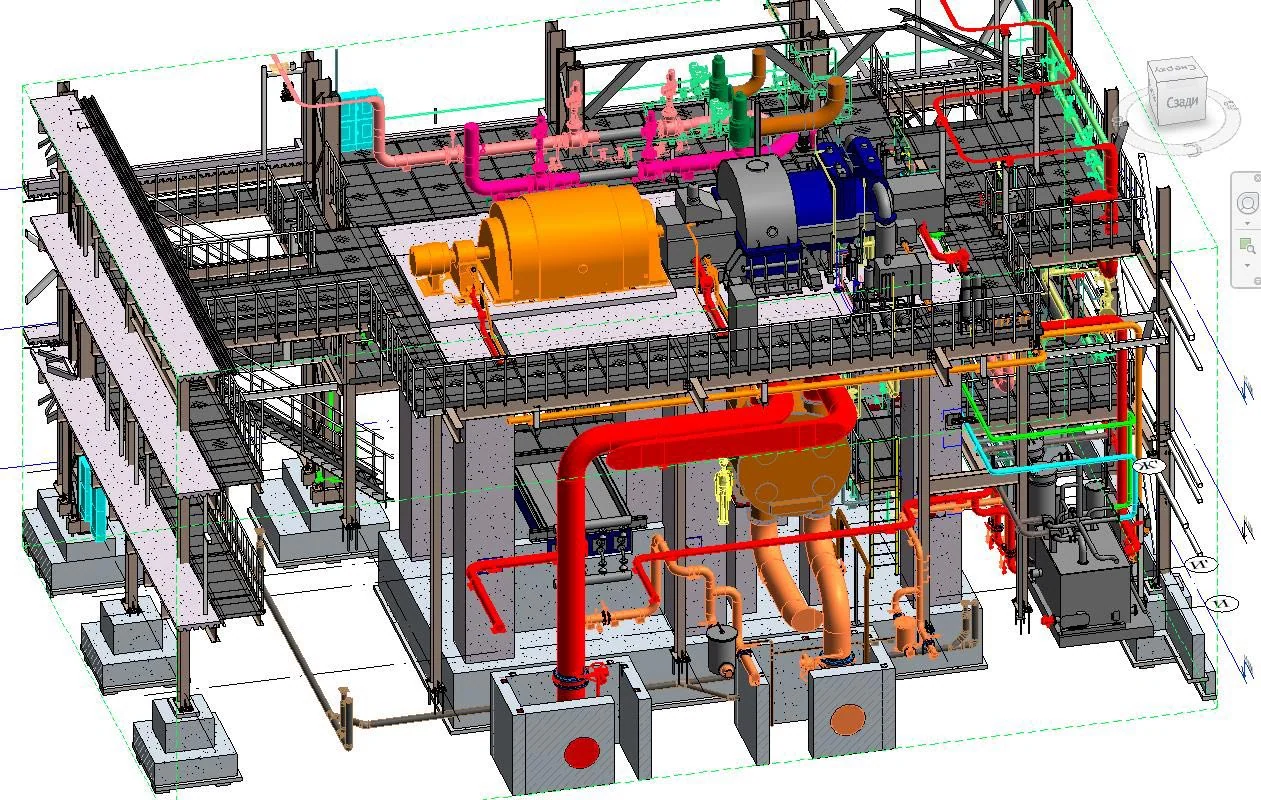
Turbine Hall

Comprehensive 3D BIM model of a turbine hall with full detailing of all engineering systems: steel structural framework, steam and condensate piping, turbine unit placement and auxiliary equipment.

BIM 3D Modeling
6 Project Sections
LOD 400 Detail Level
Turbine Hall — Cross Section
3D Model — Southwest View
3D Model — Southeast View
3D Model — Northeast View
3D Model — North View
3D Model — General View
Turbine Hall — Cross Section 1 / 6

Advantages of Working With Us

Professional team of engineers and designers with extensive experience in the energy industry

Years of Experience

Years of Experience

Our company has significant experience in designing energy facilities of various complexity and purpose

Comprehensive Approach

Comprehensive Approach

We perform a full cycle of work from pre-project research to design supervision

High Qualification

High Qualification

The company employs highly qualified engineers and designers with extensive experience

Modern Technologies

Modern Technologies

We use advanced software and design methods to achieve the best results

Frequently Asked Questions

We've collected answers to the most common questions from our clients. If you haven't found an answer to your question — contact us.

We use modern CAD/CAE systems for 3D modeling and calculations (Kompas-3D, SolidWorks, Ansys). This allows eliminating conflicts at early stages and ensuring high documentation accuracy.

Yes, supporting project documentation in state or non-state expertise bodies is part of our standard service package. We promptly address comments and defend adopted technical solutions.

We develop a complete documentation package: from feasibility study (FS) and basic technical solutions (BTS) to project (PD) and working documentation (WD) for all necessary sections.

The maximum period is 42 working days under part 7 of article 49 of the Russian Town Planning Code. On the developer's application it may be extended by 20 working days. The developer is free to choose between state and non-state expert review, except for the cases listed in part 3.4 of article 49, where only state review is permitted.

Investment justification is a pre-design document; the Town Planning Code contains no such stage, so it is carried out under a separate contract. Its scope covers a feasibility study to GOST R 58917-2021, an appraisal of scheme options and an estimate of capital costs under the methodology approved by Ministry of Construction order No. 707/pr as amended by order No. 180/pr of 26 March 2026. At this stage scheme decisions and project economics are fixed, while the detailed sections follow later as part of the design and detailed documentation.

Yes, for an operating plant this is the normal way of working. Tie-ins to existing pipelines and cable routes, as well as foundation embedments, are planned for the windows of scheduled maintenance of the main equipment, so the designer needs those dates in advance. The sequence in which documentation sets are issued is aligned with the maintenance schedule and fixed in a work schedule agreed with the customer.

Get a Consultation

Our specialists will help you find the optimal solution for your enterprise and calculate the economic effect

All Questions & Answers

Answers to frequently asked questions about turbogenerator units, delivery times and cooperation terms

Go to FAQ
RUSTRADE

Energy solutions that pay off

Home Engineering Project & Working Documentation Turbines Steam Turbine Rotors Turbogenerators Blades Steam turbine blades Blade manufacturing Oil Coolers Condensers About Cases News & Articles FAQ Cooperation Contacts