Regulatory framework PP RF No.87
PD composition is defined by Government Resolution No.87 dated 16.02.2008, mandatory for all capital construction projects.
Full-cycle PD and RD development for energy facilities with steam turbines: from initial data collection and engineering surveys to state expertise and detailed construction drawings.
Project documentation (PD) and working documentation (RD) are mandatory stages of any energy project. PD justifies technical decisions and undergoes state expertise; RD contains detailed drawings and specifications for construction and installation works.
Project documentation is required to obtain a construction permit for capital construction projects. For energy facilities — TPPs, CHPs, boiler houses, turbine units — PD must undergo mandatory state expertise, as such facilities are classified as particularly hazardous and technically complex under Article 48.1 of the Russian Town Planning Code.
Working documentation is developed for direct execution of construction and installation works. Unlike PD, RD is not subject to expertise but contains detailed drawings, installation diagrams, and equipment specifications with accuracy sufficient for on-site work.
PD and RD can be developed sequentially (RD after positive expertise conclusion on PD) or in parallel — when project deadlines are tight and basic technical decisions have already been approved at the OTR or feasibility study stage.
For energy facilities with steam turbines, thermal-mechanical sections, principal heat scheme calculations, selection of main and auxiliary equipment, APCS design, and electrical part with short-circuit current calculations are of particular importance.
Full scope of services — see our energy facility design hub from concept and feasibility study to working documentation. For turbine-based facilities, see also steam turbines in complete supply packages.

Indicators that determine the scope, timeline, and cost of documentation development for a specific energy facility.
PD composition is defined by Government Resolution No.87 dated 16.02.2008, mandatory for all capital construction projects.
Energy facilities undergo state expertise at Glavgosexpertiza. Review period is from 42 business days.
Full set includes explanatory note, master plan, architectural, structural, engineering solutions, construction plan, environmental, fire safety, cost estimates.
Depends on facility complexity, completeness of initial data, survey requirements, and approval scope.
PD sections are developed per the Regulation approved by PP RF No.87, RD sets are prepared per GOST R 21.101-2026. For energy facilities, the composition is supplemented with industry-specific sections.
General information on the facility, input data, justification of decisions
Facility placement, transport solutions, landscaping
Building layout, floor plans, facades, interior finishes
Foundations, load-bearing structures, frames, service platforms
Power supply, water and drainage, HVAC, communications, gas and heat supply
The core section for a power facility: heat scheme, equipment list and ratings, APCS, emission calculations
Work sequence and schedule, resource requirements, demolition works where required
Impact assessment and mitigation measures
Fire protection solutions, evacuation, detection and suppression systems
Operating conditions and limits, maintenance requirements
Accessibility solutions for the capital construction facility
Developed in the cases listed in clause 3(4) of Regulation No.87
Sections required by Russian legislation and other regulatory acts
Heat scheme, equipment and piping layout drawings
Detailed foundation, frame, and service platform drawings
Power supply diagrams, cable logs, layout drawings
APCS functional diagrams, I&C specs, panel drawings
Machine hall ventilation, water supply, drainage systems
Layout plan, vertical planning, utility networks
PD and RD serve different purposes, have different levels of detail, and carry different legal significance in the project implementation process.
| PD Project Documentation | RD Working Documentation | |
|---|---|---|
| Purpose | Justification of decisions, obtaining construction permit | Direct execution of construction and installation works |
| Key question | "What are we building and why?" | "How exactly do we build it?" |
| Detail level | Sufficient for passing expertise | Maximum — down to each node and operation |
| Expertise | State or non-state; state only in the cases listed in art. 49(3.4) of the Town Planning Code | Not subject to expertise |
| Content | Schemes, calculations, justifications, safety sections | Detailed drawings, specifications, installation diagrams |
| Legal status | Required for construction permit | Basis for contractor agreement |
In addition to documentation sets, the scope includes engineering preparation, approvals, and support at all project stages.
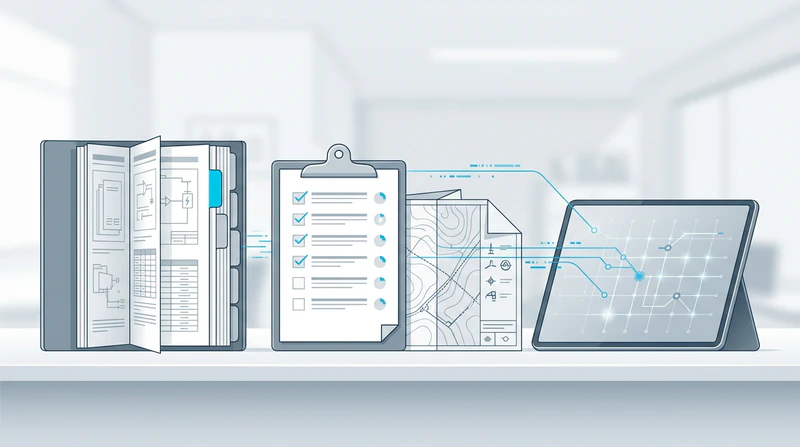
Forming the list of required data, analyzing the technical assignment, coordinating connection specifications.
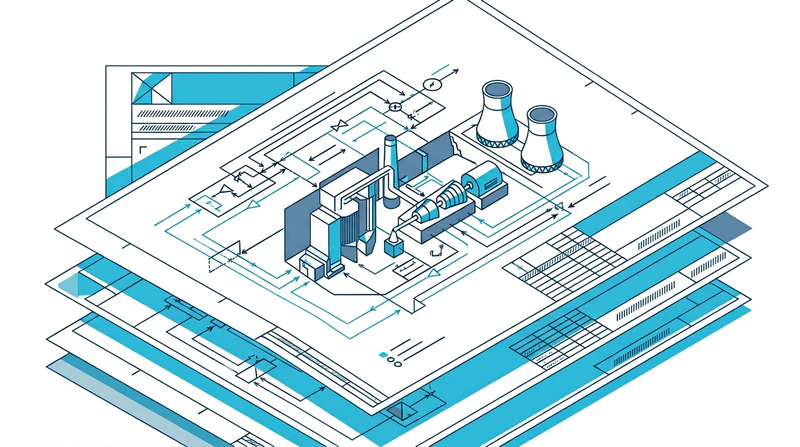
Full set of sections per PP RF No.87 considering energy facility specifics, including thermal-mechanical solutions and equipment selection.

Submitting documentation to Glavgosexpertiza, promptly resolving comments, defending technical decisions until positive conclusion.
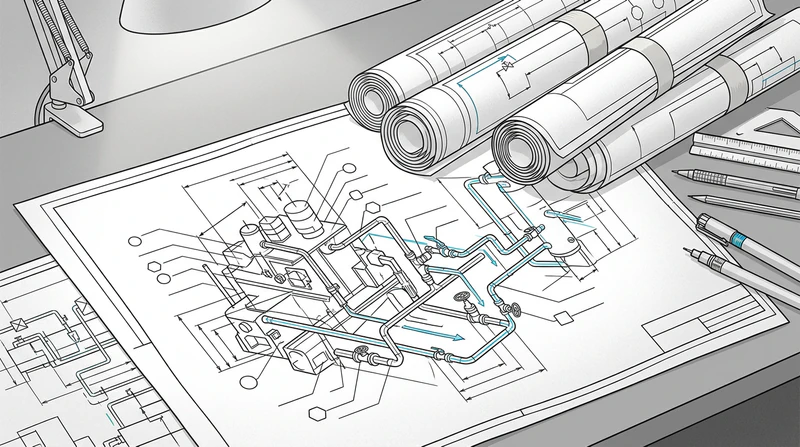
Issuing drawing sets by all marks, equipment and material specifications, installation diagrams for contractors.

Monitoring compliance of construction works with design decisions, making timely adjustments as needed.
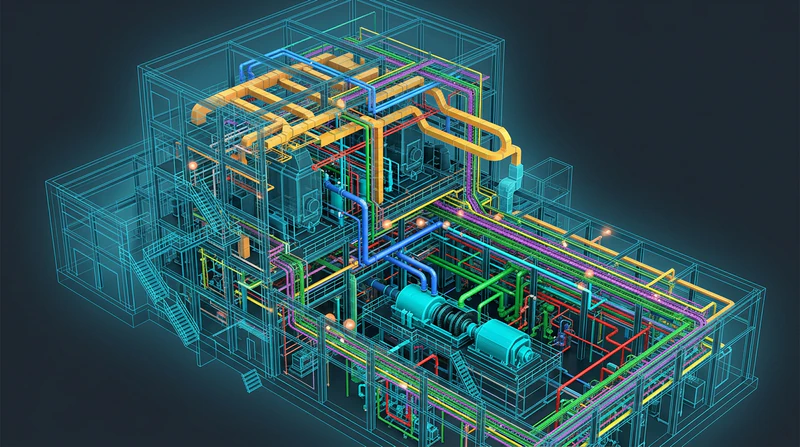
3D modeling in BIM environment for early clash detection, coordination of related sections, improving documentation accuracy.
Work sequence from receiving the technical assignment to completing design supervision during construction.
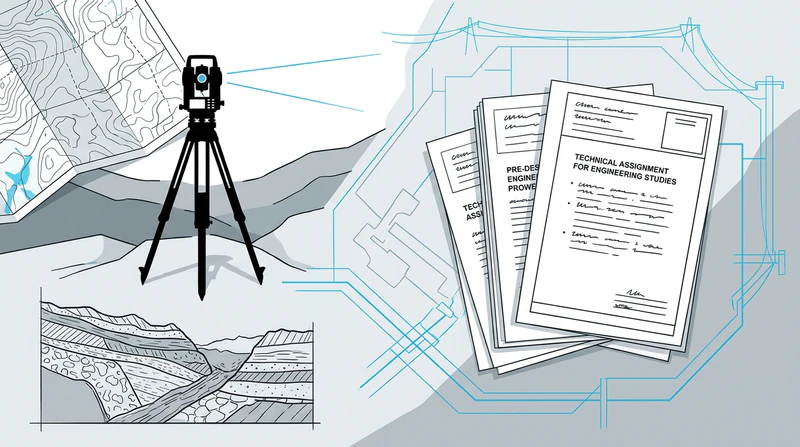
Technical assignment analysis, initial data collection, engineering surveys, obtaining connection specifications, determining key facility parameters.
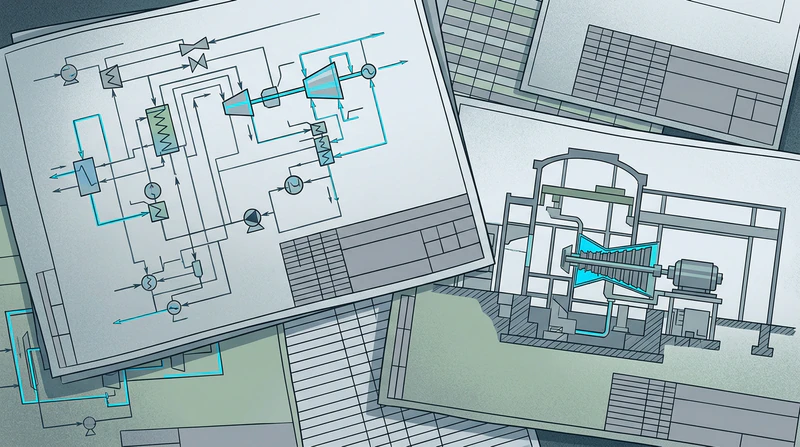
Developing all PD sections per PP RF No.87: heat scheme calculation, equipment selection, architectural and structural solutions, engineering networks, cost estimates.
Submitting PD for state expertise at Glavgosexpertiza, interacting with experts, resolving comments, obtaining positive conclusion.

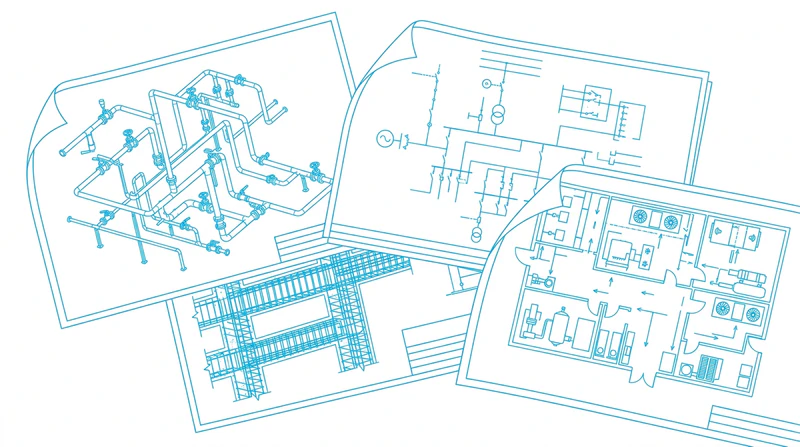
Issuing drawing sets by marks: thermal-mechanical, structures, electrical, automation, ventilation, master plan — everything needed for construction.
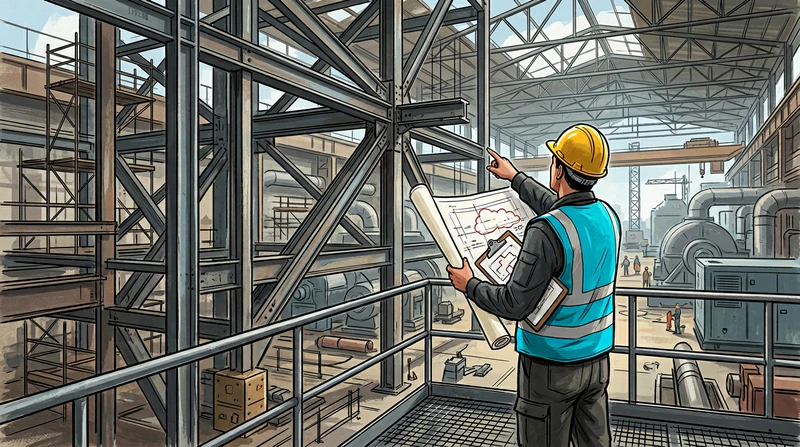
Supporting construction works: monitoring compliance with design decisions, approving deviations, making documentation adjustments.
Energy facility design is regulated by federal legislation, government resolutions, GOSTs, and industry standards.
Projects where the company performed PD and RD development for energy facilities with steam turbines.
Project documentation development for an energy center with a turbogenerator unit at an operating industrial facility.
Design of a 3.8 MW turbogenerator unit with full documentation cycle from PD to design supervision.
Comprehensive design of a 5 MW power unit with PD and RD development, expertise support.
Related services and site sections for comprehensive design and energy equipment supply solutions.
General design services section: feasibility, OTR, PD, RD, supervision, inspections.
Core equipment for which project documentation is developed.
Turbogenerator units — the key element of designed energy facilities.
Answers to common questions about design, timelines, costs, and documentation composition.
To estimate cost and timeline for PD/RD development, provide the basic project parameters. The more detailed the input data, the faster we can prepare a commercial proposal.











Мы собрали ответы на самые популярные вопросы наших клиентов. Если вы не нашли ответ на свой вопрос — свяжитесь с нами.
PD answers "what are we building and why" — it justifies technical decisions and undergoes state expertise. RD answers "how are we building" — it contains detailed drawings and specifications for construction. PD is mandatory for a construction permit; RD is not subject to expertise.
The composition is defined by the Regulation approved by Government Resolution No.87 and, since 1 September 2022, includes 13 sections. For a power facility most of the work falls into section 6, Technological Solutions: heat scheme, equipment selection and APCS.
Yes. Energy facilities (TPP, CHP) are classified as particularly hazardous and technically complex. State expertise at Glavgosexpertiza is mandatory. Industrial safety expertise per FL-116 and state environmental expertise may also be required.
Approximate timelines: PD development — 4 to 8 months, expertise — from 42 business days, RD development — 3 to 6 months. Total duration depends on facility complexity, input data completeness, and approval scope.
Minimum required: technical assignment, engineering survey results (geology, geodesy, ecology), connection specifications, data on selected or planned main equipment, inspection results (for reconstruction). We help form the complete data list and coordinate its collection.
Yes, expertise support is part of the standard scope. We submit documentation to Glavgosexpertiza, promptly resolve expert comments, and ensure a positive conclusion is obtained.
Наши специалисты помогут подобрать оптимальное решение для вашего предприятия и рассчитают экономический эффект
Ответы на часто задаваемые вопросы о турбогенераторных установках, сроках поставки и условиях сотрудничества
Перейти в FAQ
We undertake that the commercial information obtained during the preparation and implementation of the project is confidential and shall not be disclosed or transferred to third parties.
We undertake that the information obtained during the consultation is confidential and shall not be disclosed or transferred to third parties.
We undertake that the commercial information obtained during the preparation and implementation of the project is confidential and shall not be disclosed or transferred to third parties.
We guarantee the confidentiality of your data and will offer an optimal solution for your project in the shortest time.
We guarantee the confidentiality of your data and will offer an optimal solution for your project in the shortest time.
We undertake that the information obtained during the consultation is confidential and shall not be disclosed or transferred to third parties.
We guarantee the confidentiality of your data. Our specialists will help you find the optimal solution for your project.
We guarantee the confidentiality of your data and will offer an optimal solution for your project in the shortest time.
We guarantee the confidentiality of your data and will offer an optimal solution for your project in the shortest time.