Changes to energy facility design documentation requirements in 2026

2026 became a turning point for anyone who commissions or develops the design of power and energy facilities in Russia: what changed is not so much the engineering solutions themselves, but the required format, the filing procedure and the personal accountability for design documentation. For an industrial client this is not red tape — the way design and detailed documentation is prepared directly affects expert-review timelines, the risk of rejected filings and the overall project budget. Below is what actually changed, with links to primary sources, and the conclusions owner, engineering and procurement teams should draw.
What happened
In 2025–2026 a whole package of amendments came into force that together reshape the requirements for design (PD) and detailed (RD) documentation of energy facilities. The core Government Decree No. 87 of 16.02.2008 "On the composition of design documentation sections" remains in force — its term was extended to 1 September 2028 (clause 8 of Decree No. 711 of 20.04.2022). The composition of design documentation for industrial and non-industrial facilities is unchanged: 12 mandatory sections, plus any additional documentation required by the design brief and legislation. The "skeleton" was not broken — the filing format, drafting rules and signing procedure were.
The main 2026 milestones are four:
| Date | What came into force | Basis |
|---|---|---|
| 1 January 2026 | Guidelines for digital modeling of power systems and electric-power facilities (export of models to CIM XML) | Order of the Ministry of Energy No. 1428 of 31.10.2025 |
| 1 March 2026 | Mandatory qualified electronic signature (UKEP) for everyone involved in preparing the documentation; information-certification sheets (IUL) are no longer accepted by expert review | Art. 55.5-1(16) of the Town-Planning Code (Federal Law No. 309-FZ of 31.07.2025); Ministry of Construction letter No. 4420-KM/14 of 30.01.2026 |
| 1 April 2026 | GOST R 21.101-2026 (SPDS) introduced in place of GOST R 21.101-2020, with no transition period | Rosstandart Order No. 129-st of 12.02.2026 |
| 11 June 2026 | New machine-readable XML schemas: design brief (v. 01.01) and PD section No. 1 "Explanatory note" (v. 01.07) | Ministry of Construction / Glavgosekspertiza |
Separately: since 9 July 2025 a design brief approved after that date is uploaded to the state register (GIS EGRZ) and submitted for review only in XML per the approved Ministry of Construction schema. The industry-wide switch to the "Register of Requirements" instead of scattered GOST and SP standards, expected on 1 March 2026, was postponed to 1 March 2027 (Federal Law No. 507-FZ of 28.12.2025).
Why it matters for industrial clients
For an energy-division head and capital-construction team the message is simple: the cost of a formatting mistake has risen, and "paper workarounds" no longer work. Previously part of the responsibility for composition and signatures could be covered by an information-certification sheet. Since 1 March 2026 this is inadmissible — design documentation not signed with qualified electronic signatures by everyone who took part in its preparation, standards control and approval is not considered an electronic original and is not accepted for expert review.
The second sensitive point is energy efficiency in the documentation. There is no longer a separate section 10(1) "Measures to ensure energy-efficiency requirements": it was removed by Government Decree No. 963 of 27.05.2022, and the requirements were redistributed across other sections. Energy efficiency can no longer be "added as one final section" — the indicators and measures must be embedded in the design solutions across the whole documentation. For repeat-use projects the energy-efficiency indicators are governed by Decree No. 752 of 29.05.2025.
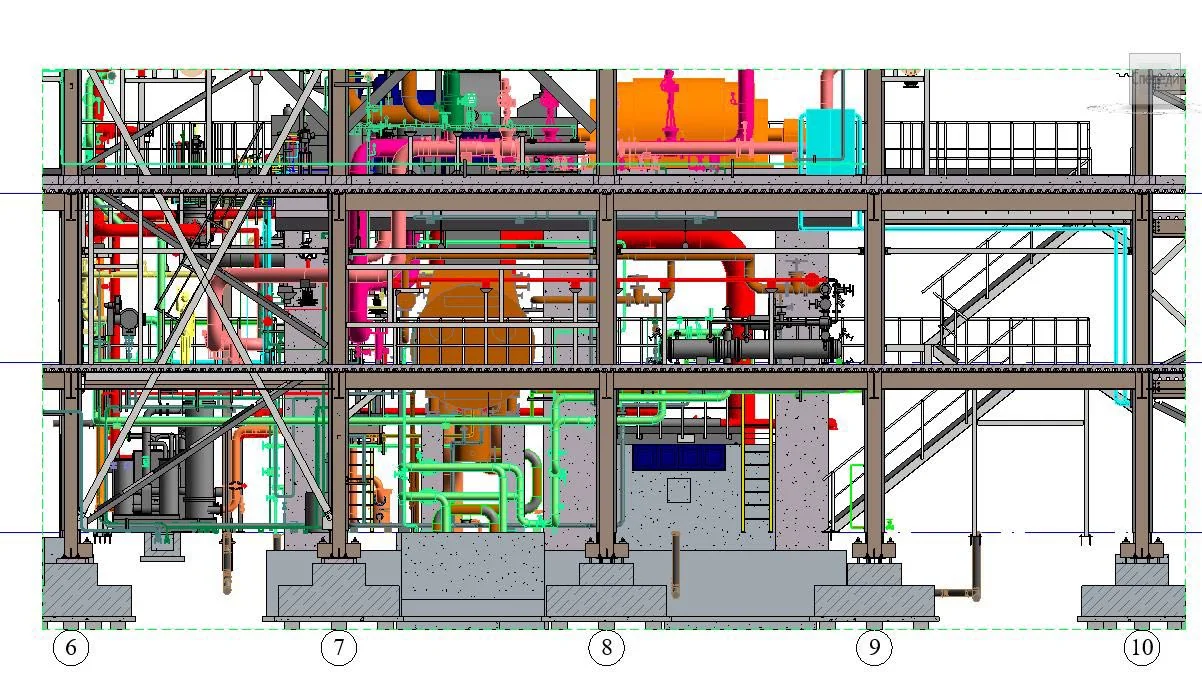
The third block concerns power engineering itself. Ministry of Energy Order No. 1428 of 31.10.2025 introduced guidelines for modeling power systems and electric-power facilities: digital models must support export to CIM XML and automated data exchange. For construction and modernization of CHP plants, substations and power-evacuation schemes, energy-sector design has finally shifted from the drawing as a deliverable to a structured digital model of the facility.
Conclusions for projects, procurement and modernization
The combined meaning of the 2026 changes is a move from transmitting electronic copies of drawings to transmitting clean machine-readable data. This changes how the technical brief is formed, how the design organization is selected and how the deliverable is accepted.
Check the format, not just the scope
Require confirmation that the design brief and the "Explanatory note" section will be delivered in the current XML schemas (v. 01.01 and v. 01.07). An outdated schema version means a formal rejection.
UKEP up front, not at the finish
Build the electronic-signing route for all co-executors into the contract and schedule. A missing UKEP for even one participant blocks submission of the whole package.
GOST R 21.101-2026
Documentation issued from 1 April 2026 follows the new edition of the standard. There is no transition period — clarify which edition your designer uses for the current package.
Digital model of the facility
For electric-power facilities require a CIM XML model (Ministry of Energy Order No. 1428). It affects both the input data set and the competencies of the design team.
For procurement it helps to grade suppliers by process maturity. An organization that already files in XML, maintains an information model per Decree No. 614 of 17.05.2024 and has a working UKEP route removes a large share of regulatory risk from the client. The obligation to use building information modeling (TIM) is set by Decree No. 331 of 05.03.2021 (as amended by No. 2357) — and although the hard threshold dates apply to housing, the digital-model vector extends across the whole industry, energy facilities included.
The 2026 bottom line for energy-facility design documentation: the section composition is preserved, but the format, drafting and personal accountability tightened sharply. The client who builds UKEP, current XML schemas, GOST R 21.101-2026 and a digital facility model into the technical brief — rather than at acceptance — wins. Expert review then stops being a lottery and becomes a predictable project stage.
Discuss your project
Need design and detailed documentation for an energy facility that meets 2026 requirements, or a review of a completed package before expert review? Describe the task and we will prepare the scope, timeline and a proposal.
Sources and regulatory basis
- Government Decree No. 87 of 16.02.2008 — composition of design documentation sections (in force until 01.09.2028)
- Rosstandart Order No. 129-st of 12.02.2026 — GOST R 21.101-2026 (SPDS) from 01.04.2026 in place of 21.101-2020
- Ministry of Construction letter No. 4420-KM/14 of 30.01.2026 — mandatory UKEP, IUL inadmissible from 01.03.2026
- Ministry of Energy Order No. 1428 of 31.10.2025 — power-system modeling in CIM XML from 01.01.2026
- Federal Law No. 507-FZ of 28.12.2025 — Register of Requirements postponed to 01.03.2027