Modernizing turbine oil cooling systems: practical engineering approach
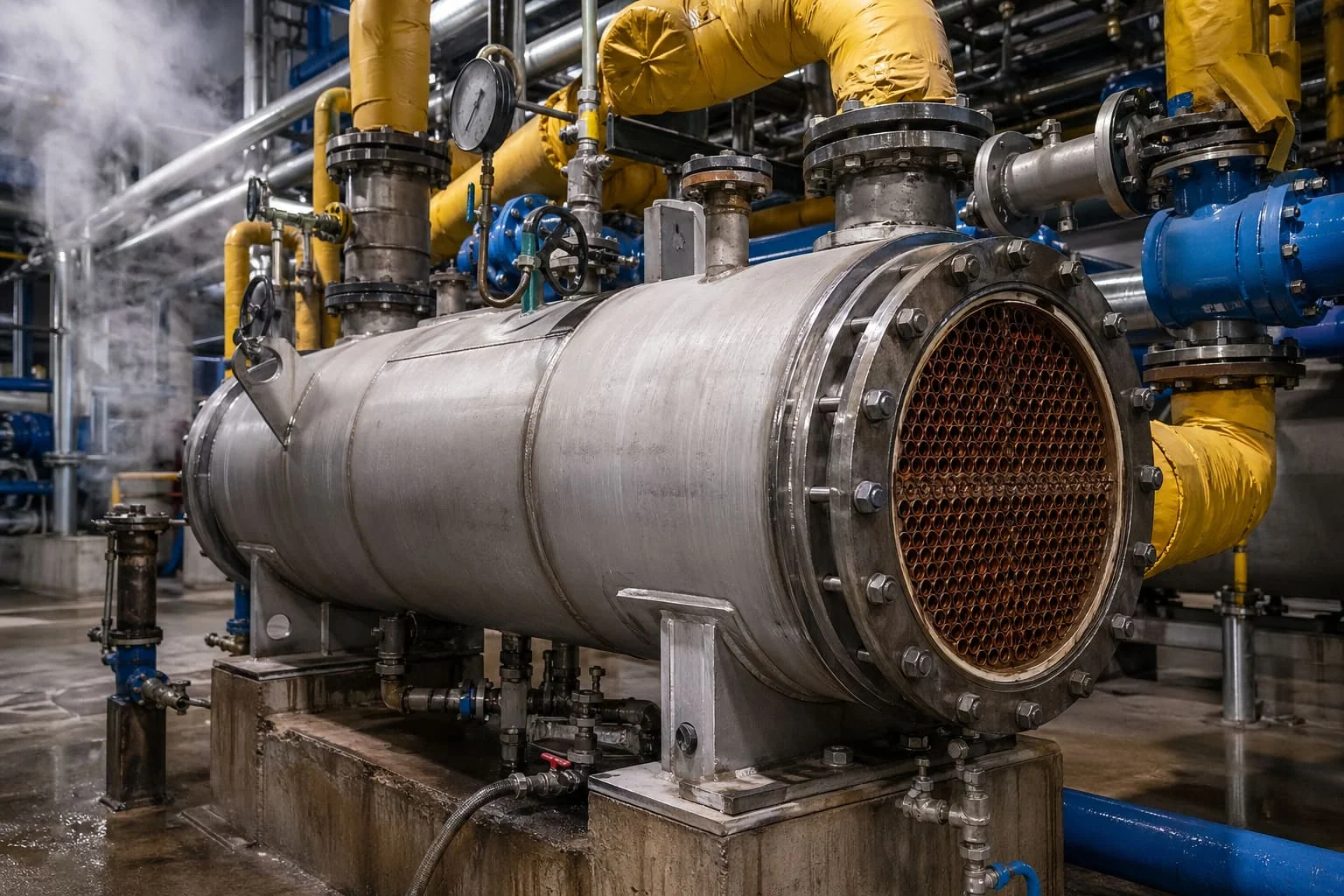
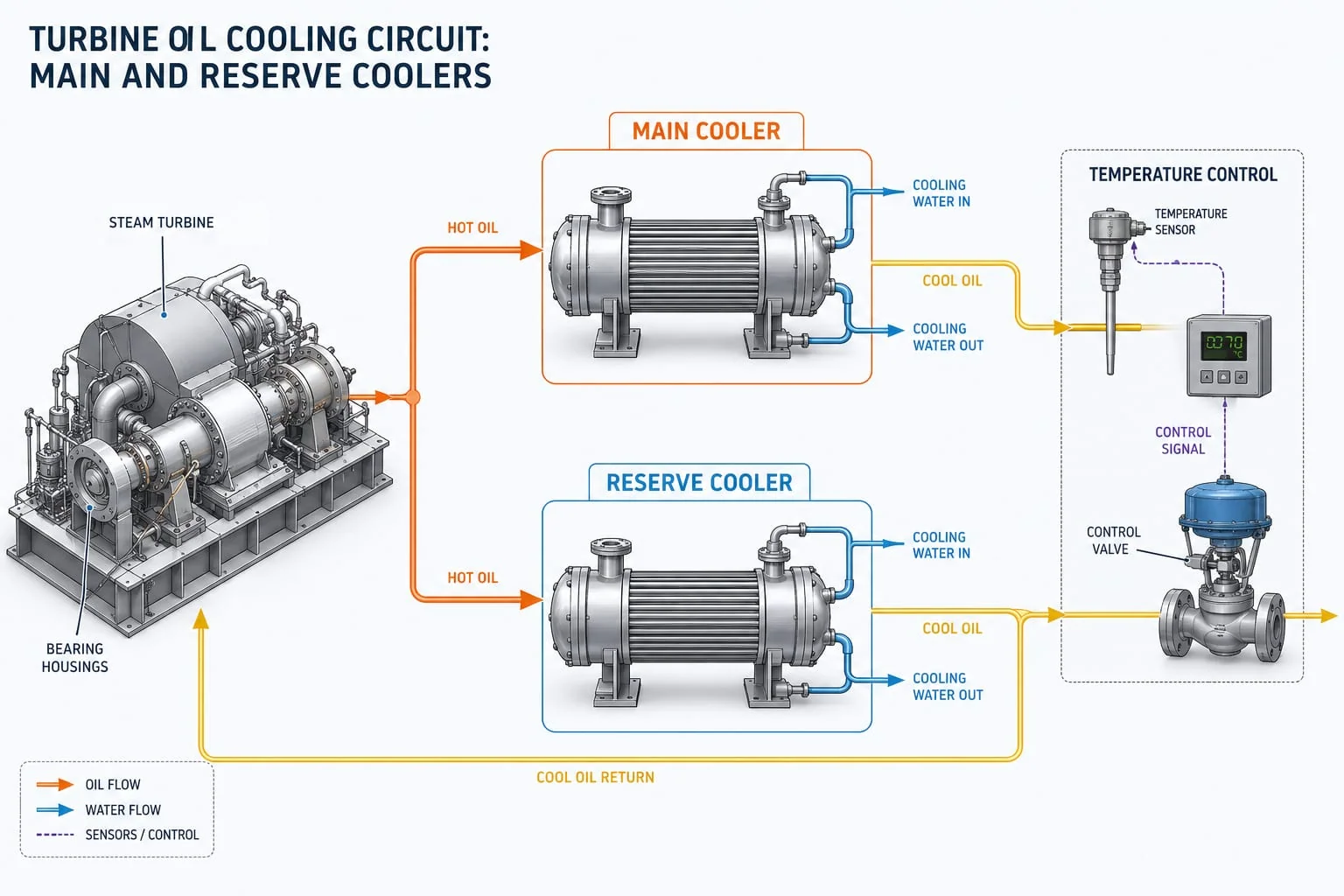
In turbine modernization projects, oil cooling is no longer treated as a minor replacement item. A leaking or underperforming oil cooler is usually only the visible symptom. The real engineering question is broader: heat load, oil and water flow, pressure drop, redundancy, tube material, maintainability and the ability to switch between the main and reserve coolers without forcing a long turbine outage.
What changed
Operators increasingly review the whole oil cooling circuit when replacing legacy shell-and-tube units. A direct like-for-like replacement may be sufficient only when the existing design is confirmed by measurements. If oil temperature rises during summer operation, if pressure drop is excessive, or if water contamination appears in the oil circuit, the project needs a full check of the cooler, piping, valves, diagnostics and cooling water quality.
Why it matters
Turbine oil removes heat from bearings, supports lubrication and often participates in control functions. Overheated oil oxidizes faster, loses viscosity margin and can lead to bearing temperature alarms, vibration issues and load limitations. For industrial plants this is not a cosmetic problem. It affects availability and outage planning.
Engineering conclusions
- The replacement cooler should be selected by heat duty, oil flow, water parameters and allowable pressure drop, not only by legacy model name.
- Tube material must match the real cooling water quality and corrosion risk.
- Main and reserve cooler switching, drains, vents and access for bundle removal should be checked before procurement.
- Auxiliary oil coolers, pumps, filters and instrumentation should be reviewed together with the main unit.
How RUSTRADE approaches the task
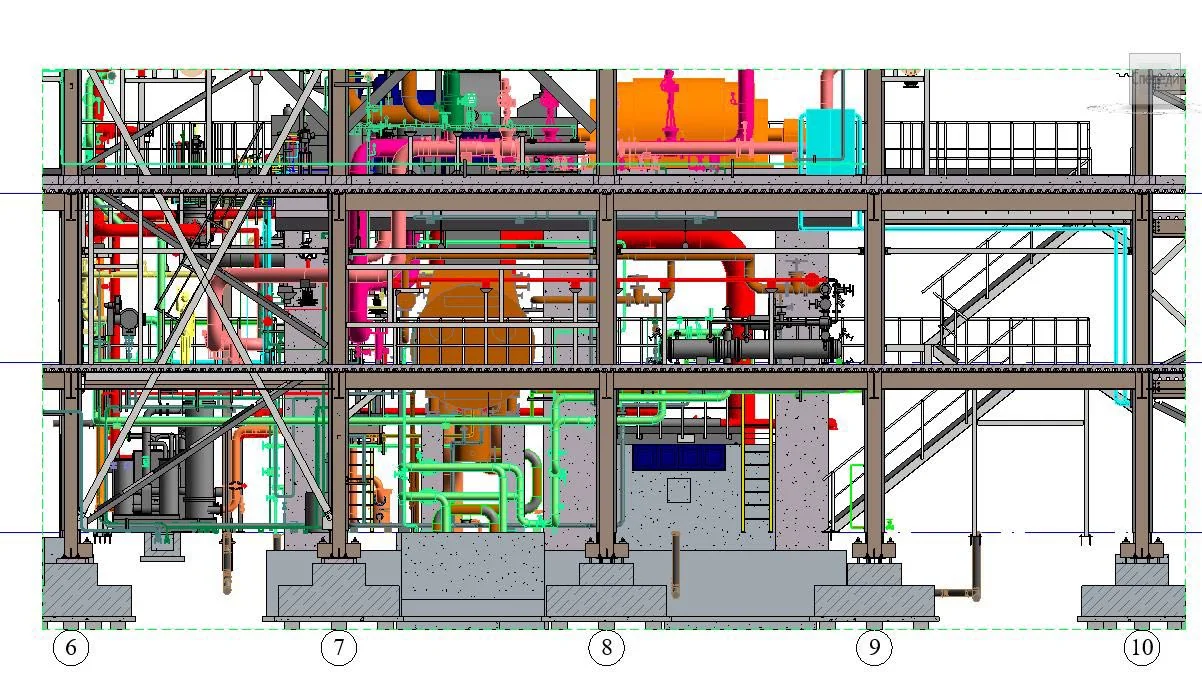
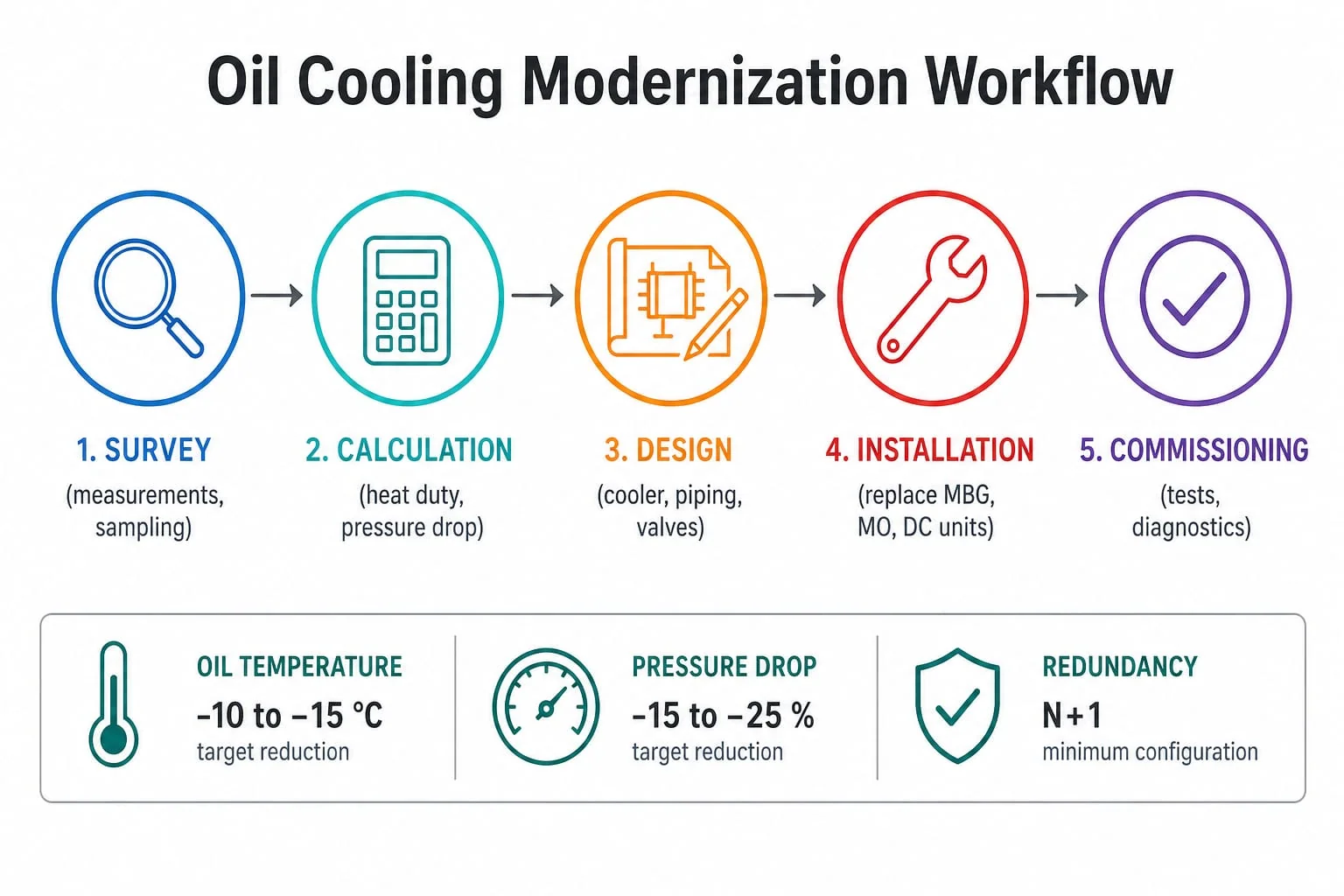
RUSTRADE treats oil coolers as part of the turbine island. For modernization projects this means combining equipment selection, design review and integration with turbine, condenser and auxiliary systems. The minimum input package includes oil grade and flow, oil and water temperatures, allowable pressure losses, drawings or photos of the existing cooler, connection dimensions and repair history.
A reliable oil cooling upgrade is not the largest possible heat exchanger. It is a correctly calculated, maintainable and measurable system with enough thermal and hydraulic margin for real operating conditions.